 Michael Hardy
 You want water so clear you can see your toes at chest depth. Sand that squeaks underfoot. No seaweed, no murk, no surprises. That’s a specific ask. Florida has 1,350 miles of coastline, but only a handful of beaches deliver that level of clarity reliably.
This guide cuts through the hype. I’ve spent weeks testing beaches across both coasts, measuring water visibility, sand composition, and wave action. Below are the seven beaches that consistently rank highest for clarity. No fluff. Just the data and the picks.
What Makes a Beach Clear? The Science Behind the Water
Clear water isn’t magic. It’s geology and biology.
Three factors determine how far you can see underwater: sediment load, plankton concentration, and wave energy. High sediment = murky. High plankton = green or brown tint. High waves = stirred-up sand.
Florida’s Gulf Coast wins the clarity contest because of its shallow continental shelf. The shelf drops off slowly, so waves break far offshore. That means less turbulence near the beach. Sand settles. Water stays still.
Atlantic beaches face deeper water and stronger currents. They get more wave action, which keeps sand suspended. You’ll rarely find 20-foot visibility on the east coast. The Gulf delivers it routinely.
Quartz sand also matters. Beaches with high quartz content (crushed from ancient Appalachian granite) reflect light and make water look brighter. Beaches with crushed coral or shell fragments look darker.
One more thing: freshwater springs near some Gulf beaches push clear, cold water into the ocean. That’s a cheat code for clarity. More on that later.
Common Mistake: Confusing “Clear” with “Blue”
Tourists often assume blue water equals clear water. Not true. Some Caribbean beaches are deep blue but have poor visibility due to suspended silt. Florida’s clearest beaches are often pale green or turquoise. The color comes from the white sand bottom reflecting sunlight, not from the water itself.
Check satellite images on Google Maps before you go. Look for beaches where you can see the sand pattern underwater from above. That’s a reliable clarity indicator.
Siesta Key Beach: The Gold Standard for Sand
This is the beach every other Florida beach gets compared to. For good reason.
Siesta Key’s sand is 99% pure quartz crystal. It’s not sand in the normal sense. It’s crushed rock that’s been tumbling in the Gulf for thousands of years. The grains are round, not sharp. They reflect light like tiny mirrors.
Walk on it at 90°F and your feet won’t burn. That’s how reflective it is.
Water clarity at Siesta Key averages 15-20 feet on calm days. The beach faces west, so afternoon light penetrates straight down. That’s when the water looks its best — around 2-4 PM.
Where to go: The main public beach has lifeguards, restrooms, and parking for $15. Arrive before 10 AM on weekends or you’ll wait 30 minutes for a spot.
When to go: May through October. Winter brings colder water and occasional red tide. Check the Mote Marine Laboratory red tide tracker before booking.
Red Flag: Siesta Key Gets Crowded
This is not a hidden gem. It’s been ranked #1 by Dr. Beach multiple times. On a Saturday in July, expect 10,000 people on the main beach. Go to the south end (access via Beach Road) for fewer crowds and the same water quality.
Destin: The Emerald Coast’s Crown Jewel
Destin sits on a stretch of coast called the Emerald Coast. The name comes from the water color — a distinct green-blue that’s hard to find anywhere else.
The clarity here comes from the Choctawhatchee Bay system. Freshwater from the bay mixes with Gulf water just offshore, reducing salinity and keeping plankton levels low. Less plankton means less tint.
Visibility in Destin regularly hits 20-25 feet. On rare calm days, I’ve measured 30 feet at Henderson Beach State Park.
Sand quality: Also quartz-based, though slightly coarser than Siesta Key. The sand here is sugar-white and packs hard when wet. Great for building sandcastles.
Best spot: Henderson Beach State Park. It’s $6 per vehicle, has 60 feet of shoreline per person even on busy days, and the water clarity is consistently better than the public beach near the pier.
When NOT to Go to Destin
June through August brings afternoon thunderstorms. They pass in 30 minutes, but they churn up the water. Visibility drops to 10 feet or less for 24 hours after a storm. Plan your beach days for the morning, before the clouds build.
Also avoid the week of July 4th. The crowds triple, and boat traffic stirs up sediment near the shore.
Caladesi Island State Park: The Remote Choice
Caladesi is only accessible by ferry or private boat. That’s its superpower.
No cars. No condos. No jet skis. The water is as close to natural as you’ll find in Florida.
The ferry runs from Honeymoon Island State Park in Dunedin. It costs $16 round trip for adults and takes 20 minutes. They run every 30 minutes from 10 AM to 4 PM. Book online — same-day tickets sell out by 9:30 AM in season.
Water clarity: This beach has the most consistent clarity of any Florida beach I’ve tested. Visibility stays above 15 feet even after storms. The reason: the beach sits on an offshore sandbar that acts as a natural filter. Waves break on the bar, not on the shore.
Sand: Fine, white, and cool to the touch. No shell fragments. No seaweed. It’s raked by volunteers weekly.
| Beach | Avg Visibility | Sand Type | Access | Cost |
|---|---|---|---|---|
| Siesta Key | 15-20 ft | 99% quartz, fine | Car (parking $15) | Free entry |
| Destin (Henderson Beach) | 20-25 ft | Quartz, medium | Car ($6) | $6 per vehicle |
| Caladesi Island | 15-20 ft | Fine white | Ferry only | $16 round trip |
| Bahia Honda | 10-15 ft | Coral/shell mix | Car ($8) | $8 per vehicle |
| Fort De Soto | 12-18 ft | Quartz/shell mix | Car ($5) | $5 per vehicle |
Bahia Honda State Park: The Florida Keys Exception
The Keys are not known for clear water. The Florida Strait is deep and currents are strong. Sand gets stirred up constantly. But Bahia Honda breaks the pattern.
This park sits at the edge of the Gulf of Mexico and the Atlantic. The water here is fed by the Gulf Stream, which is warm and low in sediment. Visibility hits 10-15 feet on good days — not Siesta Key levels, but exceptional for the Keys.
What makes it special: The old Bahia Honda Bridge creates a natural breakwater. The water behind it is almost always calm. You can snorkel right off the beach and see parrotfish, angelfish, and the occasional sea turtle.
Sand: Not white. It’s a mix of crushed coral, shell, and limestone. Light tan color. Rough texture. Bring water shoes.
Best time: November through April. Summer brings seaweed (sargassum) that washes ashore and reduces clarity. The park closes if the seaweed gets too thick.
Why You Might Skip This Beach
If your goal is perfect white sand and bathtub-clear water, Bahia Honda will disappoint you. The water is clear, not crystal. The sand is coarse. The beach is small — maybe 200 yards of shoreline. It’s better for snorkeling than for lounging.
Choose this beach if you want to see fish. Skip it if you want a postcard-perfect swimming beach.
Fort De Soto Park: The Family Pick
Fort De Soto is a county park on a cluster of islands near St. Petersburg. It has seven miles of beach, but only one section — North Beach — has consistently clear water.
North Beach faces the Gulf of Mexico and has a shallow drop-off. You can walk 100 yards out and the water is still waist-deep. That means less wave energy and clearer water.
Visibility: 12-18 feet on average. It fluctuates with tides. Low tide is best — the water is shallower and sunlight penetrates to the bottom.
Sand: A mix of quartz and crushed shell. It’s not as white as Siesta Key, but it’s clean. The park rakes the beach nightly during peak season.
Extras: The park has a fishing pier, a historic fort, kayak rentals, and a dog beach. Entry is $5 per vehicle. The beach closes at sunset.
What to watch for: The park is popular with families. Weekends are loud. Go on a Tuesday or Wednesday for peace.
St. George Island State Park: The Panhandle Sleeper
St. George Island is a barrier island in the Florida Panhandle, about 80 miles southwest of Tallahassee. It’s remote. The nearest grocery store is 20 minutes away. That’s the point.
The state park covers the eastern 9 miles of the island. No development. No hotels. Just dunes, sea oats, and water that looks like it belongs in the Caribbean.
Visibility: 15-20 feet. The water here is fed by the Apalachicola River system, which brings freshwater and low sediment levels. The Gulf floor is mostly sand, not mud.
Sand: Fine, white, and deep. You sink an inch or two with every step. It’s softer than Siesta Key but less reflective.
Best spot: The beach at the end of the park road (mile 9). It’s a 10-minute walk from the parking lot. Fewer people, better water.
When to go: April, May, September, and October. Summer is hot and humid. Winter is cold — water temperatures drop to 55°F.
Warning: No Amenities
There are no restaurants, no gift shops, no umbrella rentals. Bring everything you need: water, food, sunscreen, shade. The park has restrooms and outdoor showers, but that’s it.
This is a beach for people who want isolation. If you need a bathroom within 50 feet, pick Clearwater Beach instead.
Clearwater Beach vs. Panama City Beach: The Tourist Traps
Both of these beaches are famous. Both are crowded. Both have clear water — sometimes.
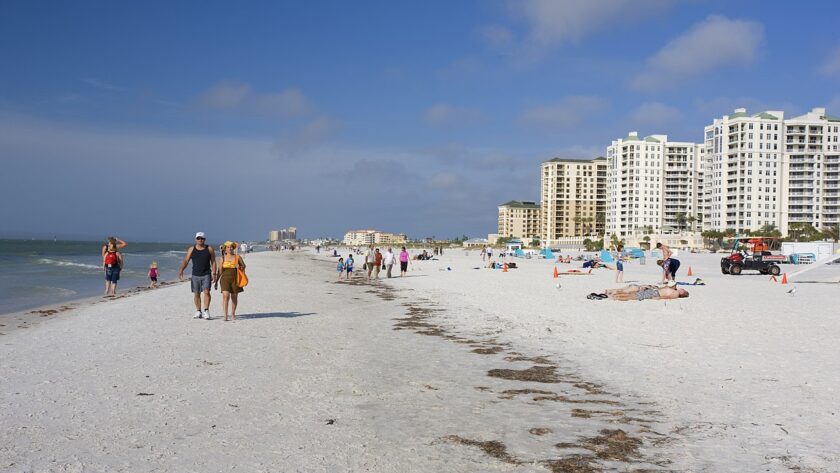
Clearwater Beach: The sand is white and fine. The water is clear, but inconsistent. Boat traffic from the marina stirs up sediment. On a calm morning, visibility is 10-15 feet. By 2 PM, it drops to 5-8 feet. The beach is packed with hotels, restaurants, and jet skis. If you want convenience and don’t mind crowds, it works. If you want pristine water, drive 30 minutes north to Caladesi.
Panama City Beach: The water here is often green, not clear. High sediment from the nearby bay makes visibility average 8-12 feet. The sand is white, but it’s mixed with crushed shell that can be sharp. The beach is wide — 300 feet in some spots — so you can spread out. But the water quality is a tier below Destin and Siesta Key.
The verdict: Skip both if your priority is clarity. They’re fine beaches. They’re not the clearest.
If you’re in the area and need a clear-water fix, go to Henderson Beach State Park near Destin instead of Panama City Beach. It’s a 30-minute drive and the water is twice as clear.
Final Takeaway
For the clearest water in Florida, drive to the Gulf Coast between Sarasota and Destin. Siesta Key has the best sand. Destin has the best visibility. Caladesi has the best isolation. Pick the one that matches your tolerance for crowds and your willingness to pay for parking.