
 Michael Hardy
 The structural evolution of Florida’s hospitality sector has reached a critical inflection point where the traditional “sun and sand” premium is being replaced by a rigorous demand for infrastructure resilience and service density. As the state navigates a post-pandemic landscape characterized by unprecedented capital investment and shifting traveler demographics, the methodology for identifying the “best” hotels must evolve. It is no longer enough to rely on legacy reputations; instead, a data-driven approach that weighs recent capital expenditures (CapEx), staff-to-room ratios, and climate-adaptive architecture is required to find true value in a market where the average daily rate (ADR) has decoupled from historical norms. This analysis provides an exhaustive breakdown of the properties currently leading the market across Florida’s most competitive corridors.
What criteria define a top-tier Florida hotel in 2024?
The definition of luxury in the Sunshine State has shifted significantly over the last three years. Previously, a beachfront location was sufficient to command premium pricing. Today, the market demands sophisticated infrastructure, including advanced climate control systems, high-speed digital integration, and culinary programs that move beyond standard resort fare. To qualify as a top-tier property in this analysis, a hotel must demonstrate a commitment to physical maintenance—ideally with a full guestroom renovation within the last 48 months—and maintain a high level of staff retention, which is the primary driver of consistent service quality.
We also look at the “Florida Green Lodging Program” certification. As environmental concerns become central to travel planning, properties that implement sustainable water management and energy-efficient cooling systems represent a more stable long-term choice. Furthermore, the presence of “resort fees” is scrutinized. A property charging $50 per night for “complimentary Wi-Fi” and pool towels is viewed less favorably than one where the fee covers substantive value, such as private boat transfers or specialized equipment rentals. Furthermore, the “hardware” of the hotel—the physical build quality, soundproofing, and HVAC efficiency—is now a primary metric for guest satisfaction in a state where humidity and external noise are constant variables.
Another critical factor is the “Digital Ecosystem” of the property. For the modern traveler, a hotel that lacks seamless mobile check-in, high-bandwidth fiber-optic internet, and integrated in-room technology is functionally obsolete, regardless of its proximity to the ocean. We prioritize hotels that have invested in “smart” room technology, allowing guests to control lighting, temperature, and service requests via centralized tablets or personal devices. This level of integration reduces friction and allows the “software”—the human service element—to focus on high-touch interactions rather than administrative tasks.
Best Luxury Beachfront Resorts in Miami and the Keys
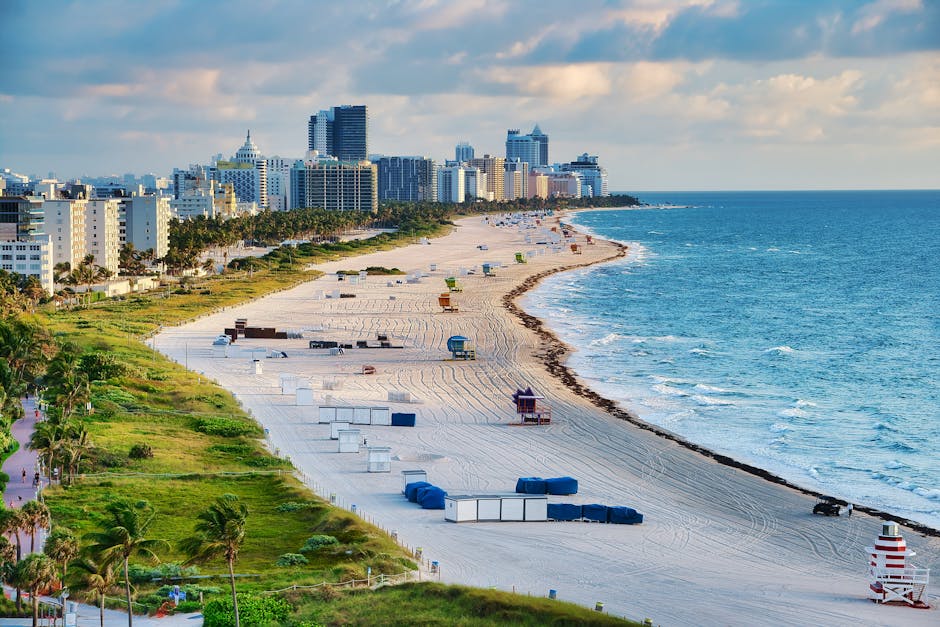
Miami remains the epicenter of Florida’s high-end hospitality, but the focus has migrated from the crowded streets of South Beach toward more secluded enclaves like Surfside and Bal Harbour. These areas offer higher square footage per guest and a more controlled environment. Further south, the Florida Keys provide a completely different logistical challenge, where the best hotels are often those that successfully mitigate the geographical isolation of the islands through superior onsite logistics and supply chain management.
Four Seasons Hotel at The Surf Club
Located in Surfside, this property is widely considered the gold standard for luxury in the state. It integrates a 1930s social club with a modern glass tower designed by Pritzker Prize-winning architect Richard Meier. The architectural integrity is matched by a service level that is rarely found elsewhere in the United States. The property features 77 guest rooms and 30 hotel residences, ensuring a low-density feel even at full occupancy.
- Approximate Price: $1,200 – $3,500 per night for standard rooms; suites can exceed $10,000.
- Specs: Rooms average 430–480 square feet; floor-to-ceiling windows with hurricane-rated glass for acoustic isolation.
- Pro: Exceptional privacy and world-class dining via the onsite Lido Restaurant and the Surf Club Restaurant by Thomas Keller. The spa features a Turkish hammam and specialized therapeutic circuits.
- Con: The price point is prohibitive for many, and the surrounding neighborhood is residential, requiring a vehicle or car service for most activities. The beach area is pristine but can experience significant wind due to the tower’s orientation.
Little Palm Island Resort & Spa
This is the only private island resort in the United States, located off the coast of Little Torch Key. It is an adults-only environment that focuses on total disconnection; there are no televisions in the rooms, and the use of cell phones in public areas is discouraged. Access is strictly by boat or seaplane from the resort’s “Shore Station” on Little Torch Key.
- Approximate Price: $2,500 – $5,000 per night (often inclusive of some meals and island transfers).
- Specs: 30 thatched-roof bungalows spread across four acres; Island Grand Suites offer 1,020 square feet of indoor/outdoor living space.
- Pro: Unparalleled seclusion and a truly unique “British West Indies” aesthetic. Each bungalow includes an outdoor copper tub and a private deck.
- Con: Logistically difficult to reach; the small beach is subject to seagrass accumulation depending on the tides. The lack of digital entertainment may be a drawback for those who cannot fully disconnect.
Top-Rated Family Hotels Near Orlando Theme Parks
Orlando is a high-volume market where the sheer number of rooms can lead to a decline in personalized service. However, a small subset of hotels manages to provide a luxury experience that functions seamlessly with the logistical demands of theme park visits. The primary differentiator here is proximity and the quality of transportation infrastructure provided by the hotel, as well as the ability to provide an “escape” from the sensory overload of the parks.
Four Seasons Resort Orlando at Walt Disney World Resort
This property sits on Disney property but operates with a level of autonomy that maintains the brand’s standards. It features a massive five-acre water park, Explorer Island, which includes a lazy river, two water slides, and a splash zone. This allows families to enjoy “down days” without leaving the resort, effectively extending the value of the stay.
- Approximate Price: $900 – $1,800 per night.
- Specs: 443 guest rooms including 68 suites; standard rooms are 500 square feet, significantly larger than the Disney-owned “Deluxe” category.
- Pro: On-site character breakfast and a private motorcoach service to Disney parks that is far more efficient than the standard Disney bus system. The 17th-floor Capa steakhouse offers views of the nightly fireworks.
- Con: The resort is massive, and walking from some rooms to the lobby or the water park can be time-consuming. During peak holiday weeks, the family-to-adult ratio can lean heavily toward children, impacting the tranquility of common areas.
Waldorf Astoria Orlando
Located within the 482-acre Bonnet Creek enclave, the Waldorf Astoria offers a more traditional, sophisticated atmosphere compared to the high-energy theme park resorts nearby. It recently underwent a multi-million dollar renovation of its guestrooms and public spaces (completed in late 2023), bringing it back to a competitive level with the Four Seasons. The property feels more like a metropolitan luxury hotel that happens to be in a resort setting.
- Approximate Price: $500 – $900 per night.
- Specs: 502 guest rooms; features an 18-hole Rees Jones-designed golf course and a 24,000-square-foot spa.
- Pro: Access to the adjacent Signia by Hilton pool complex, providing a balance of quiet luxury and family-friendly activities. The Bull & Bear restaurant is one of the highest-rated dining experiences in Central Florida.
- Con: The dining options can be quite expensive even by Orlando standards, and the proximity to the I-4 corridor can result in ambient noise in some outward-facing rooms.
Boutique and Historic Accommodations in Northern Florida and the Gulf Coast
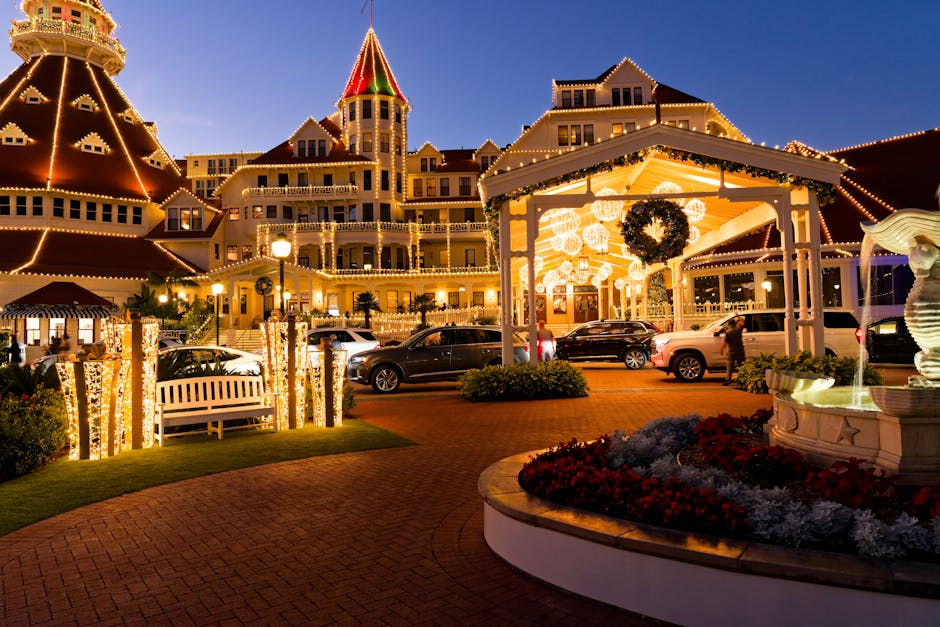
The Gulf Coast and the Florida Panhandle offer a different pace, characterized by white quartz sand and a more relaxed, “Old Florida” or European-inspired atmosphere. These hotels often prioritize architecture and local integration over the sprawling footprints seen in Miami or Orlando. The focus here is on the “walkability” of the surrounding community, which is a rare commodity in Florida.
The Pearl Hotel, Rosemary Beach
Located in the master-planned community of Rosemary Beach, The Pearl is a 55-room boutique hotel known for its distinctive black-and-white striped awnings and West Indies-style architecture. It serves as the anchor for one of the most affluent communities in the Panhandle. The hotel operates with a high degree of intimacy, offering complimentary freshly baked treats at turndown and a dedicated adults-only pool.
- Approximate Price: $600 – $1,100 per night.
- Specs: 55 guest rooms; rooms feature iPads for guest services and integrated sound systems.
- Pro: Highly walkable environment with access to private beach clubs and high-end retail. The rooftop lounge, Havana Beach Rooftop, offers some of the best sunset views on the Gulf.
- Con: The hotel is not directly on the sand; guests must walk a short distance to the private beach access point. During the summer, the town of Rosemary Beach can become extremely crowded with day-trippers.
The Ritz-Carlton, Naples
Following a massive $100 million renovation necessitated by hurricane damage, this property has reclaimed its spot as the premier Gulf Coast resort. The renovation added the “Vanderbilt Tower,” which features a massive Ritz-Carlton Club Lounge, currently the largest in North America. The design has moved away from the heavy, traditional Ritz-Carlton aesthetic toward a lighter, coastal-contemporary feel.
- Approximate Price: $850 – $1,600 per night.
- Specs: 474 guest rooms; the new Vanderbilt Tower adds 70 club-level rooms. The property features a 51,000-square-foot spa.
- Pro: Incredible sunset views and a highly sophisticated pool scene. The club level offers five food and beverage presentations daily, which can significantly offset dining costs for families.
- Con: The resort can feel corporate during the week if a large convention is in-house. The beach area is shared with several other high-end properties, leading to high density during peak hours.
Comparative Analysis of Resort Fees and Amenity Value
One of the most frustrating aspects of Florida travel is the lack of transparency regarding total costs. Resort fees are ubiquitous, but their value varies wildly. A truly “best” hotel should provide services that justify these mandatory add-ons. The table below compares several top properties based on their fee structure and the actual utility of the included services as of early 2024.
| Hotel Name | Daily Resort Fee | Key Included Amenities | Value Rating |
|---|---|---|---|
| Four Seasons Surfside | $0 (Included in rate) | Spa access, beach chairs, house car service (6-mile radius) | High |
| The Don CeSar (St. Pete) | $45 | Fitness classes, non-motorized water sports, yoga on the beach | Medium |
| Eau Palm Beach | $50 | Bicycle rentals, beach umbrellas, Wi-Fi, fitness center access | Low |
| JW Marriott Marco Island | $40 | Golf practice range, tennis court access, fitness center | Medium |
| The Breakers Palm Beach | $0 (Included in rate) | Extensive fitness facilities, high-speed Wi-Fi, beach access | High |
When booking, it is imperative to look beyond the base rate. A hotel with a $400 base rate and a $50 resort fee plus $45 for valet parking is often a poorer value than a $500 all-inclusive boutique option. For example, properties in the Florida Keys often include kayaks and snorkeling gear in their fees, which can save a family of four over $200 per day in rental costs. Conversely, urban hotels in Miami often charge fees for services that should be standard, such as fitness center access or “enhanced” Wi-Fi, which adds no real value to the stay and functions purely as a hidden price increase.
Note: Always check if the resort fee is taxed. In many Florida counties, the 12-13% occupancy tax applies to the resort fee as well as the room rate, further inflating the daily cost by an additional $5-$7 per night.
Evaluating Infrastructure: Renovation Cycles and Room Hardware
In Florida’s humid and corrosive salt-air environment, the “half-life” of a hotel renovation is significantly shorter than in inland cities. A property that was last renovated in 2018 may already show signs of significant wear, including “musty” odors in the HVAC system or pitting on balcony fixtures. When selecting a hotel, savvy travelers should inquire about the last date of soft-goods (carpets, linens, curtains) and hard-goods (furniture, plumbing, flooring) replacement.
Furthermore, the quality of the “hardware”—the actual bones of the building—matters. High-end properties like the Ritz-Carlton Naples or the Four Seasons Surfside utilize thick, multi-pane glass that serves two purposes: hurricane protection and acoustic insulation. In high-traffic areas like Miami or Orlando, the ability of a room to block out the sound of traffic, sirens, or theme park pyrotechnics is a major component of the luxury experience. If a hotel mentions “historic charm” without also mentioning “modern soundproofing,” expect to hear your neighbors and the street life below.
Navigating Florida’s Regional Micro-Climates and Environmental Factors
The “best” hotel choice also depends on regional environmental factors that can fluctuate seasonally. For instance, the Gulf Coast (Naples, Sarasota, Clearwater) is occasionally subject to “Red Tide” (harmful algal blooms), which can make beach activities unpleasant or impossible. Hotels in these areas that have extensive pool complexes or inland amenities provide a necessary hedge against these natural occurrences. Conversely, the Atlantic side (Miami, Palm Beach) is more prone to high sargassum (seaweed) accumulation during the summer months, which can impact the aesthetics and smell of the beachfront.
Additionally, the “Heat Index” in Florida often exceeds 100 degrees Fahrenheit from June through September. During this period, the quality of the hotel’s air conditioning system and the presence of shaded outdoor spaces become more important than the beach itself. Properties with “chilled” pools—a feature found at the Four Seasons Orlando and some high-end Miami resorts—offer a level of comfort that standard pools cannot match when the ambient water temperature in the Gulf or Atlantic reaches the high 80s.
Strategic Booking Windows for Florida Seasonal Travel
Florida’s hotel pricing is dictated by a rigid seasonal calendar. The “Best” hotel for your budget depends heavily on when you choose to visit. The peak season runs from just before Christmas through Easter (late March or April). During this window, occupancy rates frequently exceed 90%, and hotels have no incentive to offer discounts. Data suggests that booking at least 120 days in advance for this period is necessary to secure preferred room types and avoid the “last room” premium.
The “Shoulder Seasons”—May through early June and October through mid-November—offer the best balance of weather and value. During these months, luxury properties that command $1,000 in February often drop to $600. However, travelers must be aware of the Atlantic Hurricane Season, which peaks between August and October. While most modern Florida hotels are built to withstand Category 4 or 5 storms, a hurricane warning can result in mandatory evacuations, disrupting travel plans. It is advisable to choose hotels with flexible cancellation policies or to invest in travel insurance if booking during the late summer months.
Finally, consider the mid-week versus weekend pricing delta. In markets like Miami and Key West, Friday and Saturday nights can be 50% more expensive than Tuesday nights. If your itinerary allows, scheduling a stay to begin on a Sunday or Monday can result in significant savings or allow for a room upgrade that would be unavailable during the weekend rush. By analyzing these logistical factors—fees, seasonality, and renovation status—you can ensure that your choice of a Florida hotel is based on data and structural quality rather than just a pretty picture of a palm tree.