 Michael Hardy
 You’ve seen the Instagram shots of Lisbon’s yellow trams and Porto’s Dom Luís I Bridge. They’re beautiful. They’re also packed. In 2026, the real Portugal exists in places where the waiter still asks if you’re lost, not which influencer sent you.
This list isn’t for people who need a Starbucks nearby. It’s for people who want granite villages, empty Atlantic beaches, and the feeling that they’ve actually discovered something. Here are 10 places that deliver.
1. Monsanto: The Village Built Into Boulders
Monsanto sits in central Portugal, about 3 hours from Lisbon. Houses squeeze under granite boulders the size of small cars. Some boulders form the walls. Some form the roof. It won “Most Portuguese Village in Portugal” back in 1938, and honestly, the title still holds.
Walk up to the castle ruins at the top. The view stretches across the Idanha-a-Nova plains. Go in spring. The wildflowers make the boulders look like they’re floating in yellow and purple.
Specifics: Park in the lot at the village entrance. The climb to the castle takes 20 minutes. Wear shoes with grip — the granite paths get slick after rain. There’s a small cafe near the church selling coffee for €1. That’s not a typo.
Don’t expect nightlife. Don’t expect much beyond a handful of restaurants. That’s the point.
2. Marvão: The Fortress Town Above the Clouds
Marvão sits at 860 meters above sea level in the Alentejo region, right on the Spanish border. On foggy mornings, the town literally floats above the clouds. The 13th-century castle walls wrap around the entire village.
Stay inside the walls. There are maybe 200 residents. The silence at night is almost uncomfortable if you’re used to city noise.
- Castle entry: €2.50
- Best photo spot: The garden next to the cistern, looking west at sunset
- Food: Try the migas de espargos at Restaurante Varanda do Alentejo
- Drive time from Lisbon: 3 hours
Skip Marvão in August. The heat turns the stone streets into an oven. Go in October. The chestnut festival happens then, and the temperature drops to comfortable walking weather.
3. Piódão: The Schist Village That Looks Like a Painting
Piódão is in the Serra do Açor mountains, about 2.5 hours from Porto. Every house is made of schist — dark blue-gray stone. Blue window frames contrast against the stone. It looks like a watercolor painting that somehow became real.
Getting there is half the adventure. The road winds through mountain passes. If you get carsick, take medication beforehand. There are no straight lines on this drive.
The village has one main street, one church, and one small museum. That’s it. The real draw is the surrounding valley. Hike down to the Fraga da Pena waterfall. The trail is marked but steep. Budget 2 hours round trip.
Stay overnight at Inatel Piódão. It’s the only real hotel option, but the rooms overlook the valley. Book weeks ahead for summer weekends.
4. Comporta: The Quiet Alternative to Algarve Beaches
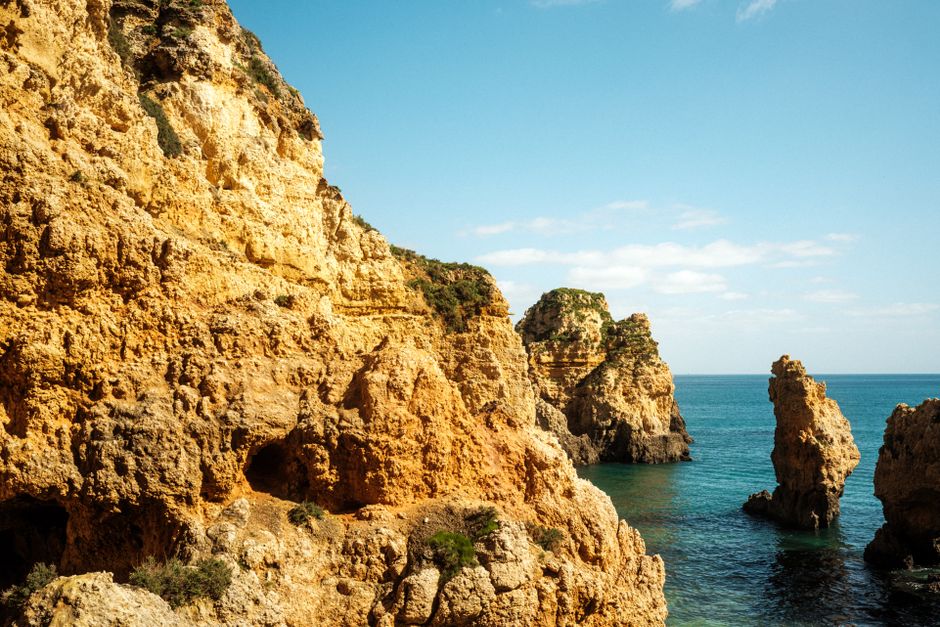
Comporta sits on the Alentejo coast, 1.5 hours south of Lisbon. The beaches stretch for miles. White sand. Almost no development. No high-rise hotels. Just rice fields, pine forests, and the Atlantic.
This is where wealthy Lisbonites go to escape. But it doesn’t feel flashy. It feels empty. The beach at Praia do Pego has one beach bar. One. That’s the entire commercial infrastructure.
| Beach | Distance from Comporta center | Facilities | Best for |
|---|---|---|---|
| Praia da Comporta | 2 km | 1 restaurant, parking | Families |
| Praia do Pego | 5 km | 1 beach bar | Quiet swims |
| Praia do Carvalhal | 7 km | 2 restaurants | Long walks |
Verdict: If you want Algarve weather without Algarve crowds, Comporta is the answer. But bring cash. Card machines are inconsistent here.
5. Tavira: The Algarve Town That Doesn’t Feel Like the Algarve
Tavira sits in the eastern Algarve, 30 minutes from Faro. It has a Roman bridge, 37 churches, and zero high-rise apartment blocks. The Gilão River runs through the center. Storks nest on the rooftops.
Most tourists skip Tavira for Albufeira or Lagos. Their loss. Tavira has the best of both worlds: Algarve beaches within 10 minutes, but a town that still feels Portuguese, not like a British pub district.
Take the ferry to Ilha de Tavira. The beach stretches for 11 kilometers. The ferry costs €2 return. The island has one campsite and a few restaurants. That’s all.
Eat at A Barquinha, right on the river. The cataplana de marisco (seafood stew) serves two people for €35. It’s the best value meal in the Algarve.
6. Évora: Roman Ruins Without the Rome Crowds
Évora is the capital of the Alentejo region. It has a 2,000-year-old Roman temple, a chapel made of human bones, and one of Portugal’s best universities. It’s a UNESCO World Heritage Site. Somehow, it still feels underrated.
The Capela dos Ossos (Chapel of Bones) is the main draw. Monks built it in the 16th century using the bones of 5,000 people. The inscription above the door reads: “We bones that are here, for yours we wait.” Cheerful stuff.
Stay inside the city walls. The streets are narrow and confusing. That’s the charm. Get lost. You’ll find a tiny wine bar serving Alentejo reds for €2 a glass.
Skip Évora if: You’re traveling with someone who hates walking. The city requires foot exploration. Cars are useless inside the walls.
7. Azenhas do Mar: The Cliff Village Near Sintra That Nobody Mentions
Sintra gets all the attention. Pena Palace. Moorish Castle. Tour buses. Azenhas do Mar sits 10 kilometers west of Sintra, on the coast. It’s a whitewashed village built into a cliff above the Atlantic.
The view from the miradouro is one of the best in Portugal. White houses stacked vertically, a natural pool at the bottom, waves crashing against the rocks. And you might have it to yourself at sunrise.
Swim in the natural ocean pool at low tide. It’s free. The water is cold — this is the Atlantic, not the Mediterranean. Bring a towel and shoes you can walk on rocks with.
Eat at Restaurante Azenhas do Mar. The seafood rice is the specialty. Book a table by the window. You’ll pay a premium for the view, but it’s worth it once.
8. Berlengas Islands: Portugal’s Wild Atlantic Outpost
The Berlengas are a small archipelago 10 kilometers off the coast of Peniche. One island. One lighthouse. No permanent residents. It’s a nature reserve with some of the clearest water in Portugal.
Here’s the catch: You need a permit to visit. The government limits daily visitors to protect the ecosystem. Book your boat and permit online at least 2 weeks ahead in summer.
The boat from Peniche takes 40 minutes. It’s rough. People get seasick. Take motion sickness tablets before boarding, not after.
Once there, walk the trail to the Fort of São João Baptista. It’s a 17th-century fort that now operates as a basic hostel. Sleeping there is an experience — no electricity after midnight, waves crashing below. Book months in advance.
Don’t visit in winter. The boats stop running when the sea gets rough. May to September is the window.
9. Sortelha: The Medieval Village Time Forgot
Sortelha is in central Portugal, near the Spanish border. It’s one of Portugal’s 12 historical villages, but it gets a fraction of the visitors that Óbidos or Monsaraz receive.
The village sits on a granite outcrop. The castle walls date to the 12th century. Walk the ring road around the walls. The view of the Serra da Estrela mountains in the distance is worth the drive alone.
Stay at Casa da Lagariça, a restored stone house inside the walls. It costs around €80 a night. The owner leaves fresh bread and local cheese in the kitchen. That’s the kind of hospitality that’s disappeared from tourist Portugal.
There’s one restaurant. One. It closes at 9 p.m. If you miss dinner, you’re eating bread and cheese in your room. Plan accordingly.
10. Ponta do Sol: Madeira’s Sunniest Village
Madeira is famous, but Ponta do Sol is not. It’s on the island’s south coast, about 20 minutes from Funchal. It’s statistically the sunniest spot on Madeira. The village tumbles down a hillside into a small bay.
The John dos Passos Cultural Center sits on the main street. It’s named after the American writer who spent time here. The building is a modernist contrast to the traditional Madeiran houses.
Swim at the pebble beach. It’s not sand, but the water is clean and the sun is reliable. Walk the coastal path toward Madalena do Mar. It’s flat, easy, and takes about an hour each way.
Verdict: If you want Madeira’s climate without Funchal’s cruise ship crowds, Ponta do Sol is the answer. Stay at the Estalagem da Ponta do Sol, a cliffside hotel with an infinity pool that hangs over the ocean.
How to Plan a Route That Makes Sense
These 10 places are spread across mainland Portugal and Madeira. You can’t see them all in one week without spending half your trip driving. Here’s a realistic split:
- Central Portugal loop (5 days): Monsanto → Sortelha → Piódão → Marvão
- Alentejo and coast (4 days): Évora → Comporta → Azenhas do Mar
- Algarve (3 days): Tavira
- Atlantic islands (3 days): Berlengas or Madeira (Ponta do Sol)
Rent a car. Public transport to these places is sparse. Buses run once or twice a day to some villages. You’ll waste hours waiting. A compact rental car costs around €25-35 per day in 2026.
Book accommodations before you arrive. Some of these villages have fewer than 10 places to stay. Summer weekends sell out.
You came here because Lisbon and Porto felt too obvious. Now you have 10 reasons to skip them. Pick three or four that fit your route. Don’t try to see everything. These places reward slow travel. Sit in a village square. Drink a €1 coffee. Watch the old men play cards. That’s the Portugal that still exists if you’re willing to drive a little further.