
 Michael Hardy
 You’ve pictured it: the iconic sunrise over Angkor Wat, the intricate carvings of Bayon, the tree roots reclaiming Ta Prohm. But as you scroll through travel blogs, one question keeps nagging you: When is the absolute best time to go? The fear of battling swarms of tourists, wilting in unbearable heat, or getting caught in a monsoon downpour is real. You want that magical, unhurried experience, not a shoulder-to-shoulder shuffle. How do you cut through the conflicting advice and pin down the ideal window for your once-in-a-lifetime Cambodian adventure?
Over 2.5 million visitors flock to Angkor Wat annually, yet a staggering 70% arrive within just four months. This creates bottlenecks that can overshadow the wonder of this ancient site. Choosing the right time isn’t just about avoiding crowds; it’s about optimizing your entire experience, from the weather you walk in to the activities you enjoy outside the temples. Let’s break down the climate, crowds, and calendar to help you pinpoint your perfect travel window.
Decoding Cambodia’s Climate: Wet vs. Dry Seasons
Cambodia operates on two primary climate rhythms: the dry season and the wet season. Understanding these patterns is your first step to a well-timed visit. Each brings unique advantages and challenges to exploring the vast Angkor complex.
The Dry Season (November to February)
This period is widely considered the peak season, and for good reason. Temperatures are cooler, typically ranging from 20°C to 30°C (68°F to 86°F), making temple exploration much more comfortable. Humidity levels drop significantly. Rain is rare, meaning clear skies for sunrise and sunset views, and easy navigation of all temple grounds. This is when the light is often described as ‘golden’ for photography.
However, this comfort comes with a trade-off: crowds. Expect the major temples like Angkor Wat, Bayon, and Ta Prohm to be bustling, especially around dawn and dusk. Accommodation prices in Siem Reap also tend to be higher, and tours book up quickly. If you choose this time, prepare for early starts and patience at popular spots. Book flights and hotels well in advance, sometimes 6-8 months out, particularly for December and January.
The Hot Season (March to May)
After February, temperatures begin to climb, reaching their peak in April and May, often soaring past 35°C (95°F) and sometimes approaching 40°C (104°F). Humidity also starts to rise. Exploring temples under the intense midday sun can be genuinely exhausting, even dangerous if not properly hydrated. The landscape around the temples can become dry and dusty.
Despite the heat, this season offers significantly fewer crowds, especially outside of the Khmer New Year festival in mid-April. If you can tolerate extreme heat and plan your temple visits for very early mornings and late afternoons, you might find a more serene experience at sites like Preah Khan or Banteay Srei. Budget travelers might also find better deals on accommodation and flights. Hydration is non-negotiable; carry at least 2-3 liters of water per person per day.
The Wet Season (June to October)
Also known as the green season or monsoon season, this period brings daily rainfall, usually in short, intense bursts in the afternoon, leaving mornings and late afternoons clear. Temperatures cool slightly, averaging 25°C to 32°C (77°F to 90°F), and humidity is high. The landscape transforms into a vibrant, lush green, with the moats of Angkor Wat full and reflective. Photography can be stunning, capturing dramatic skies and verdant surroundings.
Crowds are at their lowest during the wet season, offering a more peaceful and contemplative visit. The rain also washes away dust, making the air feel fresher. Navigating some unpaved temple paths can get muddy, so appropriate footwear is crucial. While the rain can disrupt plans, it rarely lasts all day. A light rain jacket and quick-drying clothes are essential. This is a favorite time for many photographers due to the dramatic light and fewer people.
Navigating Peak Season Crowds: What to Expect at the Temples
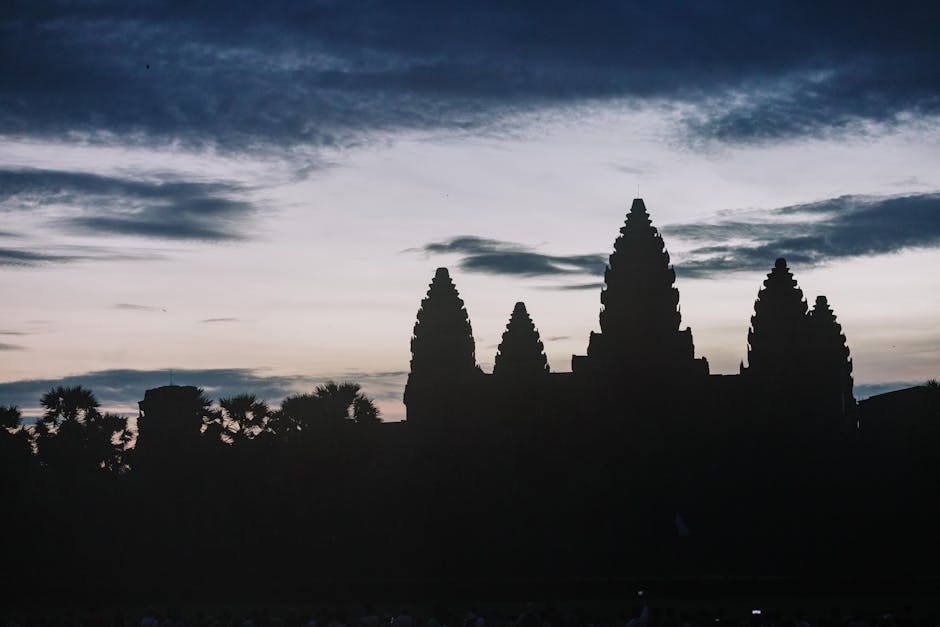
Experiencing Angkor Wat means contending with its popularity. Even in the ‘best’ seasons, some spots will be busy. Knowing where and when to expect the highest concentration of visitors helps you plan around them.
- Sunrise at Angkor Wat: This is the ultimate bucket-list item for many, and it draws massive crowds. Expect hundreds, sometimes thousands, of people gathered by the reflection ponds. If you’re determined to see it, arrive at least an hour before dawn to secure a good spot. Consider visiting on your second or third morning for a slightly less intense experience.
- Angkor Thom’s Bayon Temple: Known for its smiling faces, Bayon is another magnet for tour groups. The central towers can feel incredibly packed from mid-morning until late afternoon. Aim for an early visit (right after sunrise at Angkor Wat, or on a separate morning) or a late afternoon exploration.
- Ta Prohm (Tomb Raider Temple): The iconic tree roots growing through ancient stones make Ta Prohm a must-see. Its narrow pathways and specific photo opportunities mean bottlenecks are common. Again, go early, or schedule your visit for later in the afternoon when most tour buses have departed.
- The Small Circuit vs. Grand Circuit: The Small Circuit (Angkor Wat, Angkor Thom, Ta Prohm, Banteay Kdei) is the most popular. The Grand Circuit, featuring temples like Preah Khan, Neak Pean, and Ta Som, often sees fewer people, especially outside of peak hours.
- Lunchtime Lull: Many tour groups break for lunch between 12 PM and 2 PM. This can be a strategic window to visit some of the more popular temples with slightly reduced crowds, although the midday heat will be a factor.
Early Mornings and Late Afternoons
These are consistently the best times to visit any temple if you want to avoid the thickest crowds. The first hour after opening and the last two hours before closing tend to be less busy. For the ultimate peaceful experience, consider visiting a major temple like Angkor Wat a few hours after sunrise, once the initial rush has dispersed.
Exploring Lesser-Known Sites
Don’t limit yourself to the ‘big three.’ Temples like Banteay Srei (further out but exquisite), Beng Mealea (a sprawling jungle temple), Koh Ker (ancient capital, even further), and the Roluos Group (some of the earliest temples) offer incredible experiences with significantly fewer people. Integrating these into your itinerary provides a refreshing contrast to the more popular, crowded sites.
The Shoulder Seasons: Balancing Comfort and Cost
For most travelers, the shoulder seasons offer the sweet spot. These periods strike an ideal balance between agreeable weather, manageable crowds, and reasonable prices. If you’re seeking comfort without the intense rush, this is your prime window.
Specifically, late October into early November and late February into early March are the standout shoulder periods. These months catch the tail end or beginning of the popular dry season, meaning you often benefit from transitioning weather patterns. You’ll avoid the peak holiday crowds of December and January, and sidestep the intense heat of April and May.
October’s Transition
By late October, the monsoon rains are tapering off. The landscape is still incredibly green and vibrant from the wet season, but the heavy downpours become less frequent. Temperatures are mild, typically in the high 20s°C (low 80s°F). Tourist numbers are lower than the peak, allowing for a more relaxed experience. You might encounter a few brief showers, but they often enhance the atmosphere, leaving the air clear and the temples gleaming. This period offers fantastic opportunities for photography without battling throngs of people.
March’s Mildness
Early March still holds onto the tail end of the dry season’s pleasant temperatures, before the scorching heat of April fully sets in. Crowds are already beginning to thin out compared to the December-January rush, as many holidaymakers have departed. You’ll enjoy mostly dry, sunny days perfect for exploring. While prices might be slightly higher than the deep wet season, they are generally more competitive than the absolute peak. This is a great choice if you prioritize dry weather but want to minimize tourist density.
Month-by-Month Practicalities for Your Visit

Understanding the general seasons is one thing; knowing what each month specifically brings allows for fine-tuned planning. Here’s a breakdown to help you decide.
| Month | Weather (Avg. Temp/Rain) | Crowd Level | Pros | Cons |
|---|---|---|---|---|
| January | 22-30°C, very low rain | Very High | Perfect weather, vibrant atmosphere | Max crowds, highest prices, busy everywhere |
| February | 24-32°C, very low rain | High | Excellent weather, slightly fewer crowds than Jan | Still busy, high prices |
| March | 26-34°C, low rain | Medium-High | Dry, good light, easing crowds | Rising temperatures, can get very hot late month |
| April | 28-37°C, moderate rain | Medium-Low | Low crowds (except Khmer New Year) | Extremely hot and humid, start of heavy rains |
| May | 27-35°C, high rain | Low | Very few tourists, lush landscapes | Very hot and humid, significant afternoon rain |
| June | 26-33°C, high rain | Low | Green scenery, dramatic skies | Frequent afternoon downpours, high humidity |
| July | 26-32°C, very high rain | Low | Best for lush photography, reflective ponds | Heaviest rains, can disrupt plans |
| August | 26-32°C, high rain | Low | Fewest tourists, authentic experience | Consistent rain, muddy paths |
| September | 25-31°C, very high rain | Lowest | Extremely quiet, vibrant greens | Peak of wet season, potential for all-day rain |
| October | 25-31°C, moderate rain | Low-Medium | Greening landscape, fewer crowds, better weather emerging | Still some rain, humidity |
| November | 24-31°C, low rain | Medium-High | Pleasant weather, beautiful light, start of dry season | Crowds increasing rapidly |
| December | 22-29°C, very low rain | Very High | Ideal weather, festive atmosphere | Max crowds, highest prices, book well ahead |
January’s Peak Appeal
January truly offers near-perfect weather: cool mornings, warm days, and minimal humidity. It’s why so many choose this month. You’ll experience the temples in their most comfortable conditions, but you’ll share them with a global audience. Be prepared for queues and a vibrant, yet often crowded, atmosphere.
September’s Serenity
If solitude and lush scenery are your priorities, September is worth considering. This is often the quietest month in terms of visitor numbers. The constant rains leave the entire complex vibrant and alive, with stunning reflections and dramatic cloud formations. You’ll need to be flexible with your schedule to work around the rain, but the rewards are an unhurried, almost personal connection with the ancient site.
Beyond the Temples: Seasonal Activities Around Siem Reap
Your trip to Angkor Wat extends beyond the stone temples. Siem Reap and its surroundings offer various experiences, and the best time for each can depend heavily on the season.
What’s the best time for boat trips on Tonlé Sap?
Boat trips on Tonlé Sap Lake, particularly to the floating villages like Kampong Phluk or Chong Kneas, are best during the wet season (June to October). During these months, the lake swells dramatically, sometimes increasing its size fivefold. This means the floating villages are truly ‘floating’ on high water, and the boat rides are longer and more scenic, navigating through flooded forests. In the dry season, water levels are very low, and some villages are less accessible, requiring longer drives and shorter, sometimes less impressive, boat trips.
When can I see the rice fields at their greenest?
The iconic rice paddies surrounding Siem Reap are at their most vibrant and verdant during the wet season (July to October). This is when the rains nourish the crops, transforming the landscape into a sea of brilliant green. If you visit in the dry season, particularly March to May, the fields will often be brown and dry, having already been harvested. For lush, picturesque countryside views, the green season is unbeatable.
Are there specific festivals to plan for?
Cambodia’s biggest festival, Khmer New Year (Chaul Chnam Thmey), usually falls in mid-April. This is a time of great celebration, particularly in Siem Reap, with parades, traditional games, and lively gatherings. However, it also coincides with the hottest part of the year, and many locals travel back to their hometowns, which can affect local business operating hours. Another significant event is the Water Festival (Bon Om Touk), typically in October or November, celebrating the reversal of the Tonlé Sap river’s flow. While major celebrations happen in Phnom Penh, Siem Reap still sees festivities. Check specific dates well in advance as they vary annually.
Essential Packing for Angkor Wat’s Varied Conditions
Regardless of when you visit, focus on light, breathable layers made from natural fabrics like cotton or linen. Sun protection is critical: a wide-brimmed hat, sunglasses, and high-SPF sunscreen are non-negotiable. For the wet season, add a compact, lightweight rain jacket and waterproof walking sandals or shoes with good grip. Always carry a reusable water bottle to stay hydrated, and consider a small backpack for daily essentials like snacks and a camera.