Michael Hardy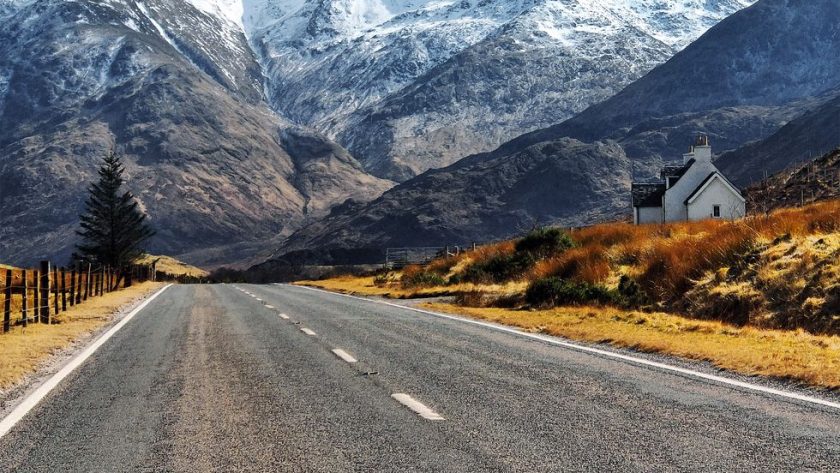
Should you start in London? Almost certainly not.
London is one of the most expensive and frustrating cities in Europe to drive through. Central parking costs £40–£60 a day. The congestion charge adds £15. You do not actually need a car there — the Tube covers everything. Take the GWR train from Paddington to Bath instead (1 hour 20 minutes, £20–£45 depending on when you book), then pick up your rental car in Bath the next morning.
This itinerary covers roughly 1,100 miles over 14 days: Bath → Cotswolds → Wales → Lake District → Edinburgh → Scottish Highlands → Isle of Skye. No single drive exceeds 3.5 hours. Three days have zero driving built in. You fly home from Inverness or Glasgow at the end — no backtracking to London, no sitting in M25 traffic on your last afternoon in the country.
Which Direction to Drive — and Why It Actually Matters
Most road trip guides say start where you land. If you fly into Heathrow, that logic points to London, then driving north the entire trip before flying home from the same airport. The problem is not the direction — it is that you hit the best scenery too early, before your brain has fully adjusted to driving on the left.
Going south to north means Bath and the Cotswolds act as a warm-up. Roads are narrow but well-signed, parking is manageable, and the driving pace is gentle. By the time you reach the single-track roads on Skye, you have had 10 days of UK driving experience. That makes a genuine difference to your confidence and enjoyment.
One-way car hire — picking up in Bath, dropping off in Inverness or Glasgow — costs roughly £20–£40 extra over a standard return rental. Enterprise Rent-A-Car and Hertz both offer one-way UK hires without heavy surcharges beyond that fee. It is worth paying.
Why Wales Comes Before the Lake District
North Wales and the Lake District are separated by roughly 3 hours on the A55 and M6. If you skip Wales entirely and drive Bath straight to the Lake District, you cover similar distance but miss Snowdonia — some of the best mountain scenery in Britain.
Snowdon is 1,085 metres, the highest peak in England and Wales. Walk to the summit in 5–6 hours via the Pyg Track, or take the Snowdon Mountain Railway for £31 return if the weather is closing in. The Crib Goch ridge scramble is serious terrain for experienced scramblers only. The Llanberis Path suits most people with decent boots and a reasonable level of fitness.
When This Route Does Not Work for You
Flying into Manchester? Start with the Lake District and drive north. Landing in Glasgow? Begin in the Highlands and work south through Edinburgh. Do not force the Bath starting point if your flights add three hours of unnecessary travel to Day 1.
One more warning: if you are traveling in July or August, book all Scottish accommodation 6–8 weeks ahead. The Highlands have limited beds, and popular spots like Portree on the Isle of Skye routinely sell out by April for summer dates. This is not an exaggeration — it catches first-time visitors every year.
The Full 14-Day Itinerary with Drive Times
Drive times are taken from Google Maps under normal daytime conditions. Not the middle-of-the-night version.
| Day | Location | Drive from Previous Stop | Key Activities | Where to Sleep |
|---|---|---|---|---|
| 1 | Bath | Train from London (1h 20m) | Roman Baths (£25 adults), Royal Crescent, Thermae Bath Spa | YHA Bath or Abbey Green B&Bs |
| 2 | Cotswolds | 45 min (Bath to Burford) | Bibury, Bourton-on-the-Water, Burford High Street | Burford or Chipping Norton |
| 3 | Cotswolds | No drive | Broadway Tower, Castle Combe, Hidcote Garden | Same base as Day 2 |
| 4 | Cardiff / Brecon Beacons | 2h 30m (Burford to Cardiff) | Cardiff Castle, Pen y Fan hike, Brecon market town | Cardiff city centre or Brecon |
| 5 | Snowdonia | 2h 15m (Cardiff to Betws-y-Coed) | Snowdon summit hike or railway (£31), Swallow Falls | Betws-y-Coed or Llanberis |
| 6 | Lake District | 3h (Betws-y-Coed to Windermere) | Windermere lake cruise, Ambleside walk, Grasmere village | Ambleside or Keswick |
| 7 | Lake District | No drive | Keswick, Catbells ridge walk, Ullswater boat | Same base as Day 6 |
| 8 | Edinburgh | 2h 30m (Keswick to Edinburgh) | Edinburgh Castle (£19.50), Royal Mile, Calton Hill at dusk | Old Town hostel or New Town hotel |
| 9 | Edinburgh | No drive | Arthur’s Seat hike (free, 90 min), Scottish National Museum, Leith | Same base as Day 8 |
| 10 | Stirling + Loch Lomond | 1h (Edinburgh to Stirling) | Stirling Castle (£16), Wallace Monument, Loch Lomond shoreline | Stirling or Loch Lomond village |
| 11 | Glencoe | 1h 30m (Loch Lomond to Glencoe) | Glencoe valley viewpoints (free), Signal Rock, Buachaille Etive Mor | Glencoe village or Ballachulish |
| 12 | Fort William + Ben Nevis | 30 min (Glencoe to Fort William) | Ben Nevis hike (8–9h return), Glenfinnan Viaduct (free) | Fort William town centre |
| 13 | Isle of Skye | 1h 45m via Eilean Donan Castle | Eilean Donan Castle stop, Portree harbour, The Storr | Portree or Sligachan |
| 14 | Fly from Inverness | 2h 30m (Portree to Inverness Airport) | Old Man of Storr morning walk, Kilt Rock viewpoint | Travel day |
Days 3, 7, and 9 have zero driving. Most road trip guides load you into a car every single morning. After a week of daily drives, new environments, and early starts, a morning where you can sleep past 7am and wander without a destination is what keeps the second week enjoyable rather than exhausting.
The Day 13 drive from Fort William to Skye passes Eilean Donan Castle at the junction of three sea lochs. Stop. It takes 20 minutes and it earns its reputation as one of the most photographed buildings in Scotland.
The One Mistake That Derails Most UK Road Trips
Spreading the Scottish Highlands too thin. Four days sounds generous until you are actually standing in Glencoe and realize the valley alone deserves two full days to properly explore. If time is tight, cut Wales to a single day and bank those hours in Scotland — not the other way round. Everything south of Edinburgh can be revisited on a future trip. The Highlands are worth every day you give them, and nobody has ever left Skye wishing they had spent less time there.
What International Visitors Actually Need to Know About Driving Here
The practical logistics most guides skim past:
- Left-hand driving. You adapt within an hour. The bigger risk is roundabouts — give way to traffic already on the roundabout, approaching from your right. Take them slowly the first day.
- Single-track roads in Scotland. Common on Skye and across the Northwest Highlands. One lane, two directions, with passing places marked by white diamond signs. When you meet an oncoming vehicle, pull into the nearest passing place — even if that means reversing 50 metres. This is not optional; it is how these roads function.
- Young driver surcharges. Under 25? Europcar and Enterprise both charge around £10–£15 per day extra. On a 14-day hire that adds £140–£210. Build it into your budget before you search for cars.
- Petrol. Fill up in towns. Between Fort William and Portree there are roughly two stations. A full tank from Fort William covers the trip to Skye and back comfortably — do not push it on a quarter tank in the Highlands.
- The Skye Bridge. The A87 crossing to Skye is free. No ferry needed to reach the island itself. CalMac Ferries only become relevant if you want to continue to the Outer Hebrides from Uig on Skye — book those months ahead for summer travel.
- Breakdown cover. Add it when you book the car, or take out an AA membership. Remote Highland roads with no mobile signal are not where you want to discover your rental company’s customer service hold time is 40 minutes.
Which Car Size to Book
A compact hatchback — Ford Fiesta or equivalent — handles every road on this itinerary, including Skye’s single-track lanes. A large SUV is actively worse: harder to pull into passing places, heavier on fuel, and awkward to park in small village centres like Portree. Midsize hatchback is the right call. Automatic transmission costs £20–£30 more per week but is worth it if you have never driven a manual gearbox on the left side of the road simultaneously — trying to learn both at once on a Highland mountain pass is not the time.
Parking in Edinburgh and the Highlands
Edinburgh city centre parking is expensive and scarce. The Ingliston Park and Ride near Edinburgh Airport costs £4 return and connects to Haymarket station in 25 minutes — use it for your Edinburgh base days and leave the car there. In Inverness, central council car parks are free after 6pm. In Fort William, the town centre car park charges roughly £3 for a full day — among the most reasonable you will find anywhere in the UK.
What 2 Weeks in the UK Actually Costs
The honest number for two people traveling at a mid-range budget — not camping, not staying in five-star hotels — is around £3,000–£3,500 for the trip itself, excluding flights. Here is the real breakdown:
| Category | Budget Option (per couple) | Mid-Range (per couple) | Notes |
|---|---|---|---|
| Car hire, 14 days one-way | £380 | £580 | Enterprise or Hertz; one-way drop fee included in estimate |
| Petrol | £130 | £160 | ~1,100 miles at roughly £1.48/litre (2026 average) |
| Accommodation per night | £55 (YHA or hostel) | £110 (Premier Inn or B&B) | Scottish Highlands: add £15–£25 premium in July and August |
| Food per person per day | £20 (self-catering mix) | £45 (cafes and restaurants) | Scottish pub lunches average £10–£15 per person |
| Paid attractions | £80 total | £180 total | HES Explorer Pass (£60 for 7 days) covers three major castles |
| Total, couple, 14 days | ~£1,900 | ~£3,200 | Flights not included |
Accommodation in the Scottish Highlands is the biggest single variable. A Premier Inn in Fort William costs around £75 in April and can reach £140 in peak July. Book 8–10 weeks out for summer travel — that is not excessive caution, it is just the reality of Highland capacity.
For attractions, the Historic Environment Scotland Explorer Pass is the clearest value purchase on the trip. It costs £45 for 3 days or £60 for 7 days, and covers Edinburgh Castle (£19.50 standard adult admission), Stirling Castle (£16), and Urquhart Castle on the banks of Loch Ness (£10.50). Visit all three and the 7-day pass has paid for itself immediately. Arthur’s Seat in Edinburgh, every viewpoint in Glencoe, and the Old Man of Storr on Skye are all free — some of the best things on this entire itinerary cost nothing.
The best cheap meal of the trip: cullen skink — Scottish smoked haddock soup — at a village pub in the Highlands. Around £8–£10, genuinely excellent, and nothing like anything you will find at home.
Two weeks across the UK is not a budget holiday, and trying to squeeze it into £800 per person means cutting corners on accommodation and speed that will leave you exhausted. Set a realistic number, book Scotland early, and the itinerary takes care of itself.