 Michael Hardy
 May is one of the most balanced months for an Algarve trip: long daylight, mild walking temperatures and fewer visitors than July and August. The Atlantic is still cool, but the beaches, cliffs and coastal paths are ready for full days outside.
Which Algarve beaches are best in May?
Best overall verdict: base yourself near Lagos or Lagoa if your priority is dramatic coves and cliff walks, then add one broad sandy beach for easier swimming and long afternoon breaks. May gives you enough space to enjoy famous viewpoints before the summer crowds arrive, but some beach restaurants, boat departures and water-sports concessions may still run reduced schedules.
Match the beach to the day you want
| Beach or area | Best for | What to expect in May |
|---|---|---|
| Praia da Marinha | Cliff scenery and photographs | Golden rock formations, steep access steps and limited shade |
| Praia do Camilo | A sheltered cove near Lagos | Clear water, a long staircase and a small beach that fills quickly |
| Praia da Falésia | Long walks and open sand | Wide beach, red-and-white cliffs and easier space for a picnic |
| Meia Praia | Families and gentle beach time | Several kilometres of sand near Lagos with more room to spread out |
| Praia da Arrifana | Surf scenery and a west-coast feel | More exposed conditions and stronger Atlantic swell |
Why May changes the beach strategy
Do not plan every day around swimming. The average daytime air temperature often feels warm in direct sun, yet wind can make a shaded cove cool, and Atlantic water remains brisk for many visitors. Plan a two-part beach day: arrive early for a cove, then move to a larger beach or promenade for lunch and a longer walk. Praia da Marinha and Praia do Camilo reward early starts because parking and stair access become less pleasant when busy. Praia da Falésia and Meia Praia are better choices when you want space, a flatter route and an easier exit.
How should you plan Algarve coastal walks?
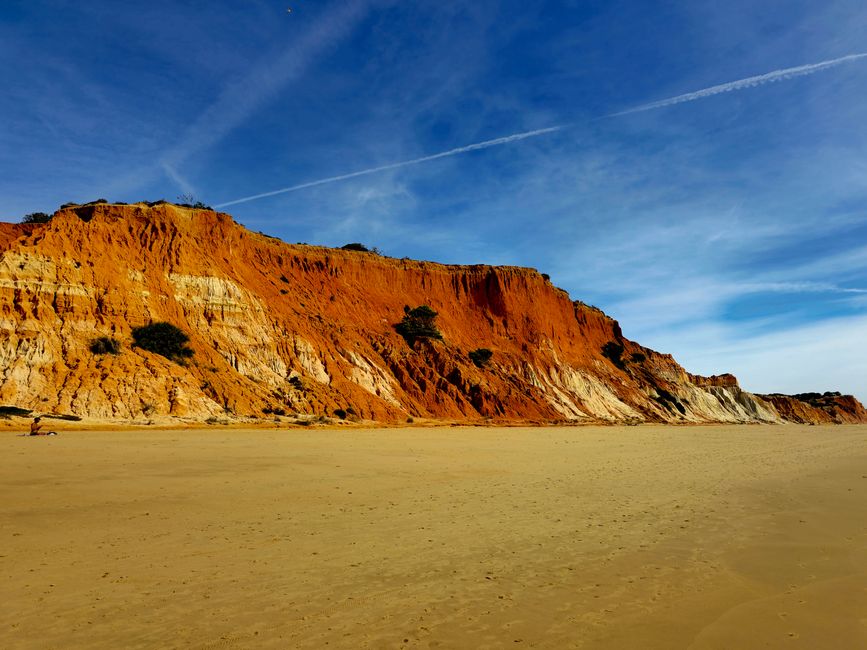
The safest and most enjoyable way to walk the Algarve coast is to treat it as a chain of short, separate routes rather than one continuous beach path. Cliffs, beaches, roads and private access points interrupt the shoreline. A route that looks close on a map can require a long inland detour, and a beach crossing can become difficult as the tide rises.
Use a tide-first route plan
Check the tide before leaving, especially around Praia da Marinha, Benagil, Praia do Carvalho and the beaches east of Lagos. Start cliff sections early, then descend to beaches only when you know the return route remains open. Never walk close to the cliff edge. Algarve sandstone can erode beneath an apparently solid lip, and loose stones can fall from the face after rain or strong wind. Keep several metres back from edges and obey barriers, even when another visitor has crossed them.
Three routes with different demands
- Seven Hanging Valleys Trail: the classic Lagoa route covers about 5.7 kilometres one way between Praia da Marinha and Praia do Vale de Centeanes. Allow three to four hours with stops, water and return transport.
- Ponta da Piedade: the Lagos headland works well as a shorter sunrise or late-afternoon walk. Combine the viewpoints with Praia do Camilo, but treat the stairs as part of the workout.
- Rota Vicentina near Carrapateira: choose this for a wilder west-coast landscape, stronger wind and more exposed paths. It suits walkers who want space more than easy swimming.
Carry offline maps, water and a charged phone. Mobile coverage can vary near coves. A walking route should finish before sunset, not at the moment sunset begins.
What does a practical five-day Algarve itinerary look like?
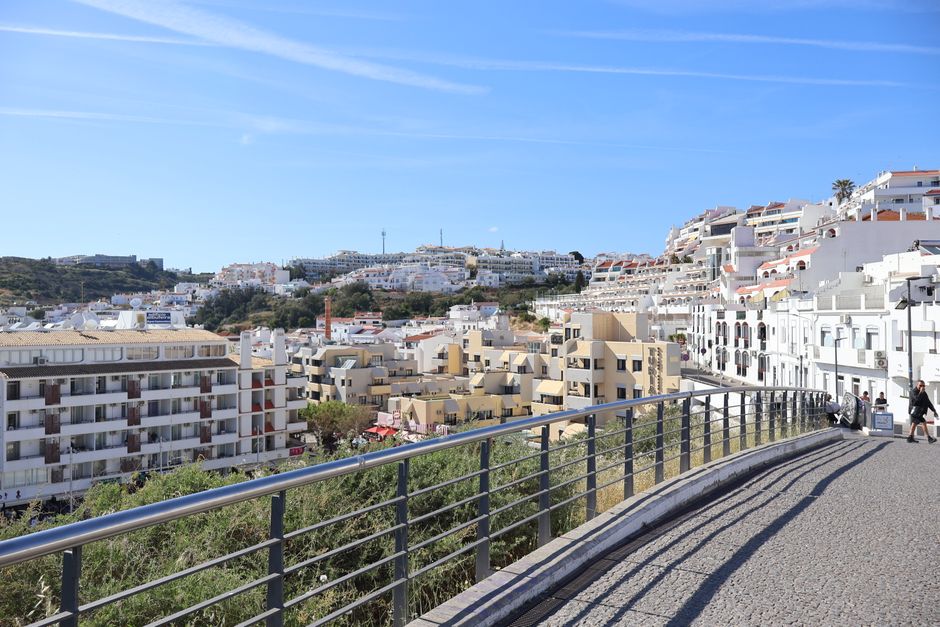
This plan keeps driving reasonable and leaves room for weather changes. Use Lagos as the base for the western and central coast, or split the stay with two nights near Tavira if the eastern Algarve matters as much as the cliffs.
- Day one — Lagos: explore the old town, walk from Praia do Pinhão toward Ponta da Piedade and finish at Praia do Camilo. Do the headland before the steep beach stairs.
- Day two — Lagoa coast: walk part or all of the Seven Hanging Valleys Trail. Start at Praia da Marinha, carry lunch and arrange a taxi or bus connection before setting out.
- Day three — weather buffer: choose Praia da Falésia for a long sandy walk, or use a calmer town day in Albufeira if wind or rain reaches the cliffs.
- Day four — west coast: drive to Sagres and add Praia do Beliche, Cabo de São Vicente and a short section near Carrapateira. Expect stronger wind and fewer convenient services.
- Day five — eastern contrast: visit Tavira and take a boat or ferry toward Ilha de Tavira, Fuseta or another Ria Formosa barrier island. Check the day’s departure times before committing.
This itinerary works because it does not force a beach swim every day. It gives the coast different jobs: coves for scenery, broad beaches for easy walking, and the west coast for wild views. If you rely on trains, check the current CP timetable before booking accommodation; the Algarve line links Lagos, Faro and Vila Real de Santo António, but stations are rarely beside the beach.
What mistakes ruin an Algarve beach and walking day?
The most avoidable mistake is treating a cliff coast like a flat resort. The scenery looks effortless from a viewpoint, but access often means stairs, uneven ground and a return climb. Build the day around the hardest section, then enjoy the beach as the reward.
Common failures to avoid
- Ignoring tides: a cove may have a wide strip of sand at low tide and almost no usable beach later. Check tide times before descending.
- Wearing smooth shoes: sandals with flat soles perform badly on dusty paths and polished stone steps. The Merrell Moab 3 is a sensible budget walking shoe, while the Salomon X Ultra 4 GTX gives more grip and weather protection; neither removes the need for care.
- Underestimating sun: the Decathlon Quechua NH Escape 500 16L is large enough for water, a layer and lunch without turning a short walk into a heavy pack. Use SPF 50 sunscreen such as La Roche-Posay Anthelios UVMune 400 and reapply after swimming.
- Assuming every cove has services: carry water and snacks. Beach cafés may open late, close for a private event or operate on shorter shoulder-season hours.
- Following a map line blindly: paths may divert inland, cross roads or end at a closed access point. Download the route and confirm the return plan before leaving.
- Chasing one famous photograph: Praia da Marinha and Benagil can be beautiful but busy. If the access queue is long, move to a nearby viewpoint or broader beach instead of losing half a day.
These gear examples are tools, not reasons to shop. Borrowing suitable footwear and carrying a small day pack is better than buying equipment that will sit unused after the trip.
Where should you stay for Algarve beaches and walks?
Choose Lagos for the strongest all-round base. It combines walkable restaurants, access to Ponta da Piedade, nearby coves and a rail connection. Choose Lagoa or Carvoeiro when the Seven Hanging Valleys Trail is the main purpose of the trip. Choose Sagres for exposed cliffs, surfing and a quieter west-coast mood, accepting stronger wind and longer drives to central beaches.
Lagos, Lagoa or Sagres?
| Base | Best fit | Main trade-off |
|---|---|---|
| Lagos | First Algarve visit, coves, restaurants and mixed transport | Popular areas become busy even in May |
| Carvoeiro or Lagoa | Seven Hanging Valleys Trail and central cliff beaches | Less convenient without a car or planned transfers |
| Sagres | Wild scenery, surf and dramatic sunsets | Windier, cooler and farther from eastern beaches |
| Albufeira | Nightlife, broad accommodation choice and central location | Less peaceful around the busiest resort areas |
| Tavira | Ria Formosa, island beaches and historic streets | Less direct access to the famous western coves |
When should you skip a rental car?
Skip the car if you plan to stay in Lagos, use guided transfers for the Seven Hanging Valleys Trail and spend several days on foot. Rent one if you want Carrapateira, Sagres, Praia da Falésia and eastern islands in the same trip. Public transport can connect major towns, but the final kilometres to coves and trailheads are the weak link. The best base is the one that cuts those awkward transfers, not the one with the lowest room rate.
For Algarve in May, plan around tide, wind and walking distance first; the beaches become far easier to enjoy once those three variables shape the itinerary.