 Michael Hardy
 Everyone lands in Hanoi, eats pho at a tourist spot near Hoan Kiem Lake, and thinks they’ve done Vietnamese food. They haven’t. Not even close. The country runs on a deeper, stranger, more regional menu that most itineraries completely ignore. I’ve spent weeks eating through four distinct food cities, and the gap between what travelers eat and what locals actually line up for is massive.
This guide covers the dishes that made me rebook flights. Specific stalls. Exact prices. The stuff you won’t find on a laminated menu with pictures.
Hanoi’s Bun Cha and the Lunchtime Obsession
Hanoi runs on bun cha. Not pho. Pho is breakfast. Bun cha is the midday ritual that shuts down entire streets. Grilled fatty pork patties and sliced pork belly float in a bowl of room-temperature fish sauce broth, sharpened with vinegar, garlic, and green papaya. You dip cold rice noodles into it. You eat it with herbs. You do not ask for a spoon.
The version at Bun Cha Huong Lien (24 Le Van Huu) got famous because Anthony Bourdain sat there with Barack Obama in 2016. The combo they ate costs 90,000 VND (about $3.60). It’s good. But the better bowl is at Bun Cha Dac Kim (1 Hang Manh) in the Old Quarter, where 45,000 VND gets you a massive portion with crispy crab spring rolls on the side. Locals argue about these two stalls the way people argue about pizza in New York.
Here’s the thing nobody tells you: bun cha is a lunch-only food. Most stalls close by 2 PM. Show up at 7 PM and you’ll find locked shutters. Plan accordingly.
How to Order Without Looking Lost
Walk in. Hold up one finger. Say “mot phan” (one portion). Sit down. The food arrives without further conversation. If you want extra spring rolls, point at the fried things and say “nem.” That’s it. The entire interaction takes 30 seconds.
The Vermicelli Hierarchy
Bun cha sits at the top of Hanoi’s bun (vermicelli) pyramid. Below it: bun rieu (crab and tomato noodle soup, 35,000 VND at Bun Rieu Cua Hang Bac), bun bo nam bo (dry beef noodles, 50,000 VND at the stall on Hang Dieu), and bun oc (snail noodles, an acquired thing). None of these are pho. All of them beat pho for flavor density.
Hue: The Imperial City Where Tiny Dishes Rule
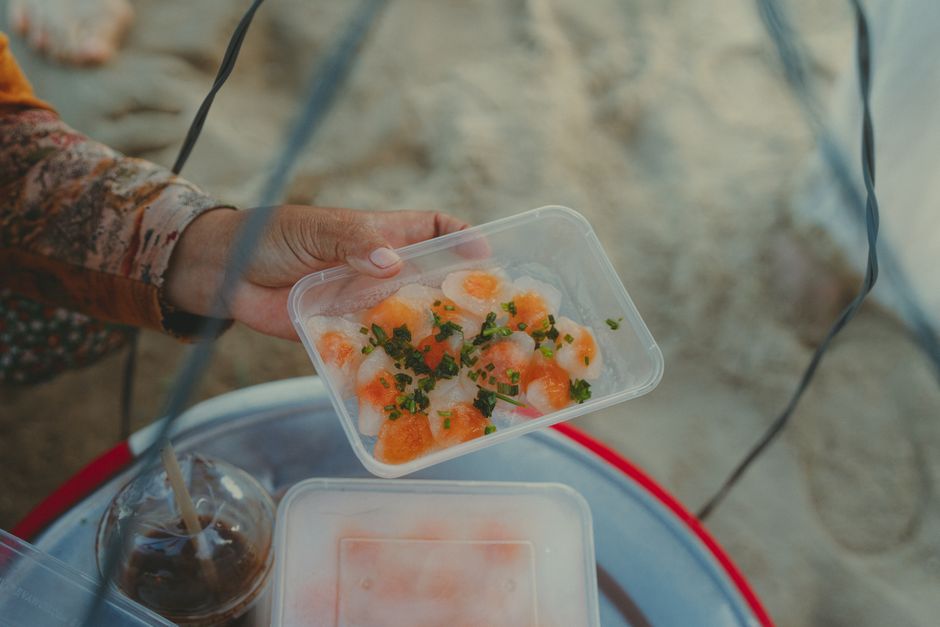
Hue food is the opposite of Hanoi street food. It’s delicate, elaborate, and built for royalty. The former imperial capital serves small plates that look like they belong in a fine-dining restaurant but cost under $2. If you only eat one thing in Hue, make it banh beo.
These are steamed rice cakes the size of a coaster, topped with dried shrimp, pork rinds, and scallion oil. You eat them with a spoon, one per bite, drizzled with fish sauce. A plate of 10 costs 30,000 VND. The best spot is Banh Beo Ba Do (8 Nguyen Binh Khiem), a family-run place that’s been steaming the same recipe for three generations.
Hue also owns bun bo Hue — the spicy beef noodle soup that makes pho look bland. Lemongrass, chili oil, beef shank, and a cube of congealed pig’s blood if you want it. The broth is red. It stains. It’s worth it. Bun Bo Hue My Tam (5 Tran Cao Van) serves a bowl for 40,000 VND that will reset your spice tolerance.
The Royal Banquet Problem
Some Hue restaurants sell “royal banquet” experiences for 500,000+ VND per person. Skip these. They’re tourist theater. The actual royal cuisine survives in the street stalls and small family restaurants. You’ll eat better for 100,000 VND total than any banquet hall delivers.
Hoi An’s Cao Lau and the Water Mystery
Cao Lau is the most misunderstood noodle dish in Vietnam. It only exists in Hoi An. The noodles get their texture from water drawn from a specific ancient well — or so the story goes. What’s true: you can’t replicate cao lau outside Hoi An. The noodles are thick, chewy, and slightly gray. They sit under slices of char siu pork, crispy croutons, and local greens. No broth. Just a splash of concentrated sauce.
The bowl at Cao Lau Ba Be (19 Tran Phu) costs 35,000 VND. It’s the first stall in a row of three, all run by the same extended family. They’ve been making cao lau for 40 years. The pork is roasted over charcoal every morning. When it’s gone, they close. Usually by 3 PM.
Here’s my honest take: cao lau is good, but it’s not the best thing in Hoi An. That title belongs to banh mi Phuong (2B Phan Chau Trinh), which Bourdain also visited and which now serves 2,000 sandwiches a day. The “mixed” banh mi costs 30,000 VND and contains five types of pork, pate, egg sauce, and pickled vegetables. It’s the best sandwich I’ve eaten anywhere, including Paris. Get there before 10 AM or wait 30 minutes.
Mi Quang: The Dish Tourists Ignore
Mi Quang is the other Hoi An noodle dish, and it’s better than cao lau. Turmeric-yellow rice noodles in a shallow pool of intense broth, topped with shrimp, pork, quail egg, peanuts, and sesame rice crackers. The broth is meant to be slurped, not spooned. It’s a Central Vietnamese thing that most travelers skip because the name doesn’t show up in guidebooks. Mi Quang Ong Hai (6A Truong Minh Luong) serves the definitive version for 40,000 VND.
Saigon’s Banh Xeo and the Crispy Pancake Economy
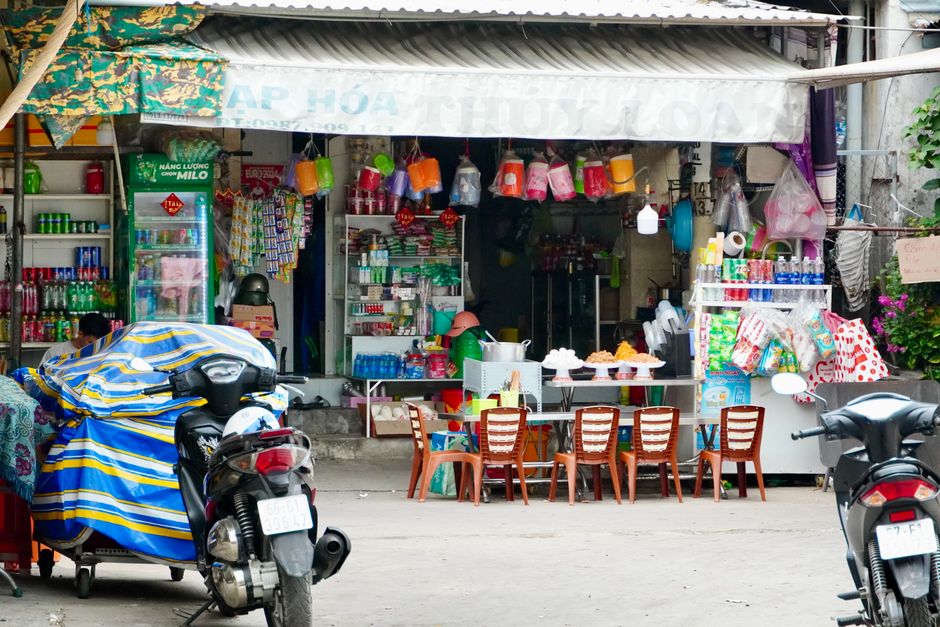
Saigon eats faster, louder, and later than the north. The signature dish is banh xeo — a crispy turmeric crepe folded around shrimp, pork, and bean sprouts. You break off pieces with your hands, wrap them in lettuce and herbs, and dip in fish sauce. It’s messy. It’s communal. It’s the opposite of Hanoi’s quiet noodle focus.
The best banh xeo in Saigon is at Banh Xeo 46A (46A Dinh Cong Trang), where a single crepe costs 45,000 VND and feeds one hungry person or two polite ones. The pan is seasoned from decades of use. The edges shatter. The center stays soft. This is the standard every other banh xeo gets measured against.
But here’s the failure mode: many Saigon restaurants now serve pre-made banh xeo that’s soggy by the time it reaches your table. If the crepe doesn’t crack when you break it, send it back. Or leave. A proper banh xeo is cooked to order and served within 60 seconds.
The Broken Rice Breakfast
Com tam — broken rice — is Saigon’s breakfast of record. It’s a plate of fractured rice grains (the byproduct of milling, once considered peasant food) topped with a grilled pork chop, shredded pork skin, a steamed egg meatloaf, and pickled vegetables. Com Tam Ba Ghien (84 Dang Van Ngu) opens at 6 AM and runs out of pork chops by 9. A full plate costs 65,000 VND. It’s the best breakfast in Vietnam, and I’ll fight anyone who says otherwise.
The Regional Comparison Table
| City | Signature Dish | Price Range | Best Stall | Time to Eat |
|---|---|---|---|---|
| Hanoi | Bun Cha | 40,000–90,000 VND | Bun Cha Dac Kim | 11 AM–2 PM only |
| Hue | Bun Bo Hue | 35,000–50,000 VND | Bun Bo Hue My Tam | Breakfast or lunch |
| Hoi An | Mi Quang | 35,000–45,000 VND | Mi Quang Ong Hai | Lunch |
| Saigon | Com Tam | 50,000–80,000 VND | Com Tam Ba Ghien | 6 AM–9 AM |
This table exists because timing matters more than location. Show up at the wrong hour and you’ll eat a lesser version of the same dish at a tourist stall next door.
What I’d Skip and What I’d Rebook For
Skip the cooking classes. They cost 600,000–900,000 VND and teach you recipes you’ll never recreate because the ingredients don’t exist outside Vietnam. Skip the food tours that hit five stops in three hours — you’ll be too full to taste anything by stop four. Skip any restaurant with a menu longer than two pages.
Rebook for the regional specificity. Hanoi’s bun cha. Hue’s banh beo. Hoi An’s mi quang. Saigon’s com tam. Each city has one dish that justifies the trip alone. The mistake is trying to eat everything everywhere instead of eating the right thing in the right place.
My pick for the single best food city in Vietnam: Hue. It’s smaller, cheaper, and less tourist-choked than Hoi An. The dishes are more varied than Hanoi. And you can still find stalls where the recipe hasn’t changed in decades. If you have one week, do Hanoi and Hue. If you have two, add Saigon. Hoi An is worth one day for the banh mi and mi quang, then move on.