 Michael Hardy
 You’ve seen the Instagram posts. Croissants in Paris. Sunsets in Santorini. And you’re thinking: “That costs a fortune.” It does — if you do it the way influencers do. But I’ve been traveling Europe on less than $50 a day for years. 2026 isn’t cheaper than last year. Inflation hit everywhere. But with the right route and a few hard rules, $50 still gets you a solid day. Here’s how.
Why $50 a Day Still Works in 2026
In 2026, a hostel dorm in Amsterdam cost $40. In 2026, that same bed is $55. So $50 a day sounds like a joke. It’s not. You just can’t stay in Amsterdam.
The trick is geography. Eastern and Southern Europe are dramatically cheaper. A dorm bed in Krakow runs $12. A filling meal in Belgrade costs $5. The $50 budget works when you pick the right countries.
Here’s the real math for 2026:
| City | Dorm Bed (avg) | 3 Meals (street food/local) | Local Transport | Total |
|---|---|---|---|---|
| Krakow, Poland | $12 | $15 | $3 | $30 |
| Belgrade, Serbia | $10 | $12 | $2 | $24 |
| Budapest, Hungary | $14 | $16 | $4 | $34 |
| Porto, Portugal | $18 | $20 | $5 | $43 |
| Lisbon, Portugal | $22 | $22 | $6 | $50 |
Notice anything? Lisbon is the ceiling. If you stay in Lisbon, you have zero left for a museum, a drink, or a train ticket to the next city. That’s why you start east and move west slowly.
Where to Go: The 2026 Budget Route
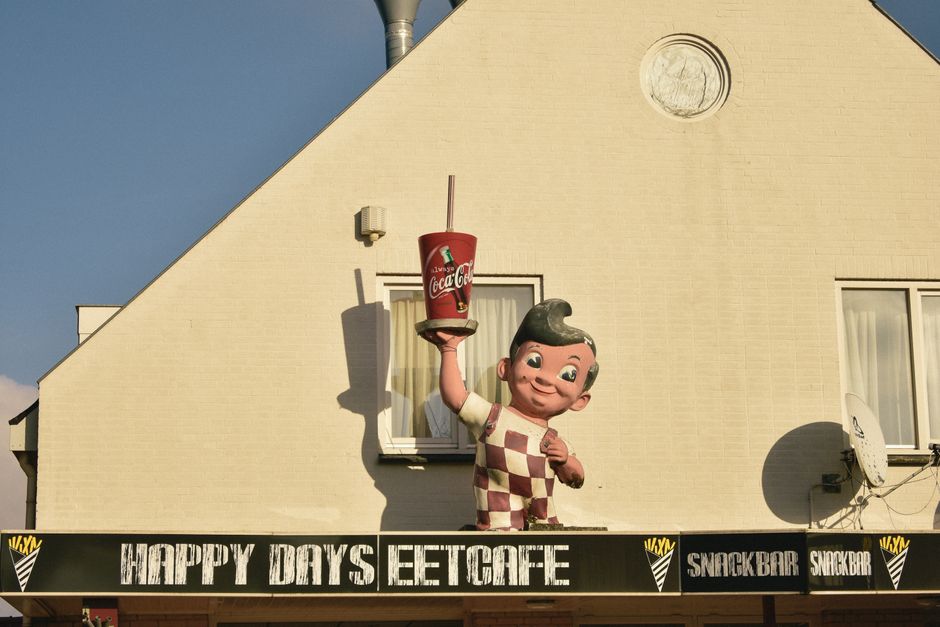
This is the exact route I’d run in 2026. It keeps your daily average under $40, leaving $10 for emergencies or a nicer meal.
Week 1-2: The Balkans (Serbia, Bosnia, North Macedonia)
Start in Belgrade. Hostelworld shows dorms at $10-12. Eat burek from a bakery for $1.50. Drink local rakija for $1 a shot. Then bus to Sarajevo ($15, 6 hours). Hostels there run $11. Food is similar. This region is the cheapest in Europe by a long shot.
Week 3-4: Central Europe (Poland, Hungary)
Fly from Belgrade to Krakow on Ryanair for $25 if you book 3 weeks ahead. Krakow is walkable. Auschwitz day trip costs $10 including transport. Then train to Budapest (4 hours, $12). Budapest has ruin bars where a beer is $2. Stay in a hostel near the Jewish Quarter for $14.
Week 5-6: Portugal (Porto, Lisbon)
Fly Budapest to Porto on Ryanair for $30. Porto is cheaper than Lisbon. A dorm in Porto is $18. Eat a francesinha sandwich for $8. Then take the train to Lisbon (3 hours, $10). Lisbon is your most expensive stop. Skip the trams — they’re tourist traps. Walk or use the metro for $1.80 per ride.
The 3 Biggest Budget Killers (and How to Avoid Them)
Most people fail at $50 a day not because the budget is impossible, but because they bleed money on stupid stuff.
1. Accommodation booked last minute. Booking a hostel the day before costs 30% more. Book 2 weeks ahead on Hostelworld. Filter by “under $15” and read recent reviews. A hostel with a 9.0 rating and a kitchen saves you $8 per meal.
2. Eating in tourist zones. A pizza near the Colosseum in Rome costs $18. Walk 10 minutes away and the same pizza costs $8. Use Google Maps — search “street food” or “local bakery” and read the photos. If the menu has English and a picture, walk past.
3. Buying water bottles. A 500ml bottle costs $2. Carry a reusable bottle. Every hostel and most public fountains have free drinking water. In 30 days, that’s $60 saved. That’s two extra days of travel.
Transport: The $50 Traveler’s Biggest Choice
Trains are comfortable but expensive. Buses are cheap but slow. Flights are fast but cost $25-40 with Ryanair or Wizz Air. The right choice depends on distance.
For trips under 300km, use FlixBus. A bus from Krakow to Warsaw (4 hours) costs $8. For 300-800km, compare FlixBus vs Ryanair. The bus takes 8 hours and costs $12. The flight takes 2 hours and costs $25. Factor in airport transfer time — it’s often a wash.
For trips over 800km, fly. A flight from Budapest to Porto costs $30 and saves you two days of bus travel. Use Skyscanner with the “cheapest month” view. Book at least 3 weeks ahead.
The Interrail pass is a trap for $50-a-day travelers. A 7-day pass costs $280. That’s $40 per travel day. You’re better off buying point-to-point bus tickets. They cost $8-15 per trip.
Money: The Hidden Fee That Eats Your Budget
Every time you use a bank ATM in Europe, you pay $4-6 in fees. Do that 10 times in a month, and you’ve lost $50. That’s a full day of travel.
Get a Wise card or a Revolut card before you leave. These cards give you the real exchange rate with zero fees. Withdraw cash once a week from a bank ATM (not a Euronet machine — those charge $8 per withdrawal).
Also: carry $100 in cash as backup. Some hostels in Serbia and Bosnia only take cash. And never exchange money at airports. The rate is 10% worse than a bank ATM.
The Verdict: Can You Actually Do It?
Yes. But only if you follow the route and the rules. Start in the Balkans, move through Central Europe, end in Portugal. Book hostels 2 weeks ahead. Eat street food. Use a Wise card. Skip the Interrail pass.
In 2026, $50 a day means you won’t eat at Michelin-star restaurants or sleep in private rooms. But you’ll see Krakow’s main square, Budapest’s thermal baths, and Porto’s Douro river. And you’ll do it without debt.