 Michael Hardy
 You board a 12-hour flight with a neck pillow dangling from one hand, a crossbody bag on your shoulder, and a boarding pass slipping out of your pocket. By hour three, the pillow is on the floor, your bag keeps sliding off your tray table, and you’ve lost your phone between the seats. A travel pillow strandbag fixes all of that in one zip.
This is a 2-in-1 product: a neck pillow with a built-in storage compartment big enough for a phone, passport, earbuds, and a snack. The strap clips around your carry-on handle, freeing your hands in the terminal. Once seated, you unclip it, wear it as a pillow, and keep your small essentials zipped inside the front pocket. No more juggling.
What Exactly Is a Travel Pillow Strandbag and Why Does It Exist?
Strandbags solve a specific problem: you need both a neck pillow and a small bag during travel, but carrying two separate items is annoying. The pillow keeps your head from flopping onto the stranger’s shoulder next to you. The bag keeps your critical items within arm’s reach. Combining them means one less thing to lose.
The concept started with inflatable pillows that had a tiny pocket for earplugs. Brands like Travelrest and Cabeau took it further by adding zippered compartments large enough for a phone and a slim wallet. The Trtl Pillow (which isn’t a traditional pillow at all — it’s a scarf with an internal support frame) also includes a small pocket for keys or a credit card. But a true strandbag has a dedicated storage volume of at least 1 liter, not just a coin slot.
At the fundamental level, this product category exists because airport terminals and airplane seats are designed for efficiency, not comfort. You have no surface to set things down. A strandbag gives you a wearable tray table.
How to Pick the Right Strandbag: Specs That Actually Matter
Don’t buy based on color. Buy based on these four numbers.
Storage Volume (Liter Capacity)
Most strandbags hold between 0.5 and 2 liters. A 1.5-liter bag fits a Samsung Galaxy S24 Ultra, a passport, a charging cable, earbuds case, and a granola bar. Anything under 1 liter forces you to leave something behind. The Cabeau Evolution S3 has a 1.8-liter front pocket with a separate phone sleeve — that’s the sweet spot.
Closure Type
Zippers beat magnets. Magnetic closures fail when the bag is stuffed full. YKK zippers with a locking pull tab prevent accidental opening when you lean forward. The J-Pillow Travel Pillow with Pocket uses a single zipper that runs across the entire front. No velcro, no snaps.
Strap System
Look for a detachable strap with a buckle clip. The strap should be at least 1 inch wide (25mm) to distribute weight across your shoulder. Narrow straps dig in. The Trtl Pillow Plus uses a 1.5-inch webbing strap with a quick-release buckle — that’s the industry benchmark.
Washability
Pillows get sweaty. The cover should zip off and go in a washing machine. If the manufacturer says “spot clean only,” skip it. The Cabeau Evolution S3 has a machine-washable microfiber cover that dries in 2 hours on low heat.
The 3 Most Common Strandbag Mistakes (And How to Avoid Them)
Mistake #1: Buying a strandbag that doesn’t attach to your carry-on handle. If the strap lacks a luggage pass-through sleeve, you’ll have to wear it while dragging your suitcase. That defeats the purpose. Every strandbag worth buying has a back sleeve that slides over your suitcase handle. The Travelrest Ultimate Memory Foam Pillow has a wide sleeve that fits both telescopic and fixed handles.
Mistake #2: Overstuffing the pocket. A strandbag is not a purse. If you cram a tablet, a water bottle, and a paperback into the front pocket, the pillow becomes rigid and uncomfortable. The pocket is for flat items only: phone, passport, earbuds, a folded boarding pass, an energy bar. Keep the volume under 2 liters.
Mistake #3: Choosing inflatable over memory foam for long flights. Inflatable pillows save space in your bag but deflate slowly over 8 hours. You wake up with your head at a 45-degree angle. Memory foam holds its shape for the entire flight. The Cabeau Evolution S3 uses high-resilience memory foam that returns to shape after compression. It costs $45 on Amazon. An inflatable costs $15. The difference is worth the $30 if you fly more than twice a year.
When NOT to Use a Strandbag (Alternatives That Work Better)
Strandbags are not universal. Here’s when to leave yours at home.
If you carry a full-size backpack as your personal item, a strandbag is redundant. You already have a bag. A standalone neck pillow like the Trtl Pillow (which packs flat into a scarf) is lighter and takes up zero extra space. The Trtl weighs 5.6 ounces and folds into a pouch the size of a rolled-up t-shirt. A strandbag with memory foam weighs about 12 ounces and is bulkier.
If you sleep on your side or stomach, most strandbags won’t help. They are designed for upright sleeping. Side sleepers need a pillow that wraps around the neck, like the J-Pillow, which supports the chin from the front and the side of the head. The J-Pillow has a pocket, but it’s small — 0.3 liters. Fine for a key and a lip balm, not for a phone.
If your flight is under 3 hours, you don’t need a pillow at all. A strandbag becomes dead weight. Use a slim crossbody bag like the Pacsafe Metrosafe LS120 (1 liter, $35) and skip the pillow entirely.
Strandbag Comparison: 4 Top Models Side by Side
| Model | Storage Volume | Fill Type | Luggage Sleeve | Washable Cover | Price |
|---|---|---|---|---|---|
| Cabeau Evolution S3 | 1.8 liters | Memory foam | Yes | Yes | $45 |
| Travelrest Ultimate | 1.2 liters | Memory foam | Yes | Yes | $38 |
| J-Pillow Travel Pillow | 0.3 liters | Microbeads | No | No (cover not removable) | $28 |
| Trtl Pillow Plus | 0.5 liters | Scarf + internal support frame | No | Yes (scarf cover) | $55 |
The Cabeau Evolution S3 wins for most travelers. It has the largest pocket, a luggage sleeve, a washable cover, and memory foam that doesn’t flatten. The Travelrest Ultimate is the budget pick — smaller pocket but still functional. The J-Pillow is for side sleepers willing to sacrifice storage. The Trtl Pillow Plus is for ultralight packers who hate bulk.
Packing Your Strandbag: The 6-Item Maximum Rule
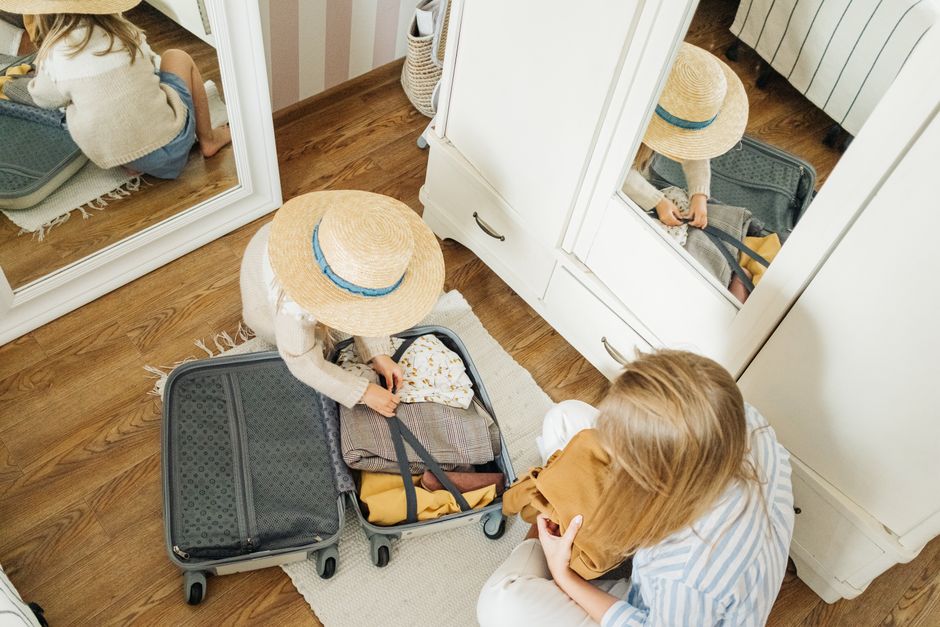
You have limited space. Pack only what you need in the seat.
- Phone — the main reason you need a pocket. Keep it accessible for photos, boarding passes, and entertainment.
- Passport or ID — you need it for immigration and security checks without digging through your overhead bag.
- Earbuds case — wireless earbuds in a hard case. The case is bulky. It fits in a 1.5-liter pocket.
- Charging cable — a 6-inch USB-C to USB-C cable. Long cables tangle. Short ones don’t.
- One snack — a protein bar or a bag of almonds. Nothing crumbly or sticky.
- Lip balm and eye mask — flat items that slide into the back of the pocket.
Do not pack a tablet, a book, or a water bottle. Those go in your carry-on under the seat. If you try to fit them, the pillow becomes a lumpy brick.
The Verdict: Which Strandbag Should You Buy Right Now?
For economy-class flyers on flights longer than 5 hours, the Cabeau Evolution S3 is the best choice because it combines the largest storage pocket (1.8 liters) with a luggage sleeve and machine-washable memory foam at $45. It solves the two biggest problems: keeping your neck supported and your small items within reach. No other model matches that combination at that price.
If you fly budget airlines with tight personal item limits, skip the strandbag entirely. Use a standalone inflatable pillow and a slim waist pack. The Travelrest Inflatable Pillow ($15) plus a FlipBelt Zipper Pouch ($20) gives you the same function for less bulk and $10 less total cost. But for everyone else, the strandbag is the single most practical carry-on accessory you can buy.