 Michael Hardy
 I’ve been backpacking through Southeast Asia on and off for the past eight years. First trip in 2018, then again in 2026, and most recently in early 2026. The question I get most now is not “what to pack” — it’s “can you still do it cheap?”
The short answer: yes, but the game has changed. That $10-a-day fantasy from 2015 is dead. But if you adjust your expectations and know where to pivot, you can still travel for $30-40 a day and live very well. Here’s my honest take on where the budget traveler stands in 2026.
Where the Money Leaks: The $5 Latte Tax
The biggest budget killer in 2026 isn’t accommodation or transport. It’s lifestyle creep from Western-style amenities that have exploded across the region.
In 2018, a coffee in Chiang Mai cost 30 baht ($0.85). In 2026, the same local stall charges 50 baht ($1.40). That’s still cheap. But the problem is the new specialty coffee shops on Nimman Road charging 150 baht ($4.20) for a flat oat latte. More backpackers are buying those now. That’s a $3.35 difference per coffee. Drink two a day for a month — that’s $200 gone.
Same story with co-working spaces. In 2018, you worked from your hostel lobby for free. Now, digital nomad hubs in Chiang Mai and Bali charge $5-8 per day. Hostels with “digital nomad packages” add $10-15 per night for a desk and decent WiFi. These add-ons are optional, but most people treat them as essential.
My rule: eat where locals eat, drink where locals drink, and work from your hostel common room. That alone saves $15-20 a day.
The real cost of a “cheap” beer
A Chang beer at a 7-Eleven costs 45 baht ($1.25). At a Khao San Road bar, it’s 120 baht ($3.35). If you pre-drink with two beers from 7-Eleven and have one at the bar, you save $4.20. Over a month, that’s $126. Small habits compound fast.
Countries Where Your Dollar Still Goes Far (and Where It Doesn’t)
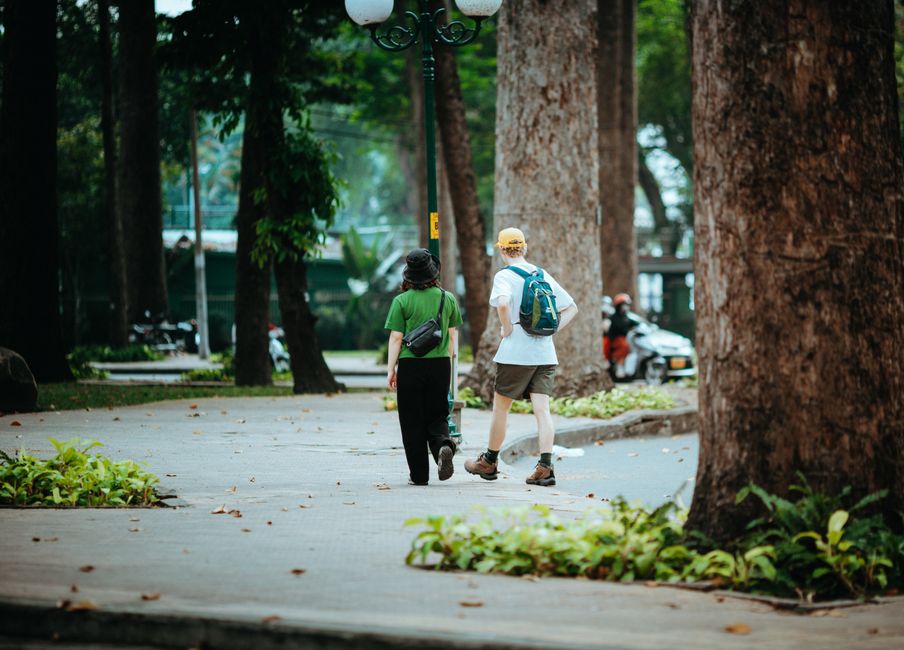
I tracked every expense for 90 days across five countries in early 2026. Here’s what I actually spent per day, including accommodation, three meals, transport, one activity, and one beer.
| Country | Daily Budget (USD) | Hostel Dorm (USD) | Local Meal (USD) | Verdict |
|---|---|---|---|---|
| Laos | $22-28 | $5-8 | $1.50-3 | Best value, but limited transport |
| Vietnam | $25-32 | $6-10 | $2-4 | Still cheap, pho is $1.80 |
| Cambodia | $28-35 | $7-12 | $3-5 | Angkor Wat entry is $37 — budget that |
| Thailand | $35-45 | $10-18 | $3-6 | Most expensive, but easiest to navigate |
| Indonesia (Bali) | $38-50 | $12-22 | $4-8 | Bali is expensive; Lombok or Sumatra are cheaper |
Laos and Vietnam are the clear winners for pure budget backpacking. I spent a month in Laos and averaged $24 a day. The slow boat from Huay Xai to Luang Prabang costs $22 for two days, and that includes your transport and a night on the boat. You can’t beat that.
Thailand is not the budget paradise it was
I love Thailand. But let’s be honest — it’s no longer the cheapest option. A dorm bed in a decent hostel in Bangkok or Chiang Mai costs $12-18. In 2018, that was $6-10. The difference is tourism rebounded hard after 2026, and prices adjusted upward. If you want the full Thailand experience on a budget, skip the islands (Koh Phi Phi, Koh Samui) and stick to the north. Chiang Rai, Pai, and Isaan region are still very affordable. I spent $28 a day in Pai and ate like a king.
Failure Modes: What Wrecked My Budget (and Yours Will Too)
I’ve made every mistake. Here are the three that cost me the most, and how to avoid them.
Mistake 1: Booking everything on Booking.com
In 2026, many hostels and guesthouses charge 15-25% more on booking platforms than if you walk in. I tested this in Chiang Mai. A hostel listed at $16 on Agoda had a “walk-in” price of $11. I saved $5 by just showing up. Always check the walk-in rate, especially in smaller towns. The only catch: hostels in high-demand areas (Bangkok, Hanoi Old Quarter) might be full. Call ahead.
Mistake 2: Taking the tourist bus
Tourist minibuses are comfortable but cost 2-3x more than local buses. In Vietnam, the local bus from Hanoi to Sapa costs $7. The tourist minibus charges $18. Same road, same time, same destination. The local bus is less comfortable — hard seats, no AC sometimes — but it’s fine for a few hours. I took local buses for 80% of my Vietnam trip and saved over $100 in a month.
Mistake 3: Not haggling at markets
I’m not great at haggling. But in 2026, vendors in tourist-heavy areas have pushed prices up aggressively. A T-shirt in Bangkok’s Chatuchak Market was quoted at 500 baht ($14). I walked away, came back 10 minutes later, and got it for 200 baht ($5.60). That’s a 60% markup on the first price. Never pay the first price at a market. Offer 40-50% of the asking price and negotiate from there. If they refuse, walk. They’ll call you back 9 times out of 10.
When Not to Backpack Southeast Asia on a Budget
This is the part most travel blogs skip. Budget backpacking is not the right choice for everyone, and there are situations where spending more makes more sense.
If you have less than two weeks. A 10-day trip to Thailand will cost more per day than a 60-day trip. The flights alone ($600-1200 from the US or Europe) make it hard to keep daily costs low. If you’re short on time, consider a shorter, more expensive trip to a single country rather than trying to “do” four countries on a shoestring. The transport costs between countries add up fast — a flight from Bangkok to Hanoi costs $60-100, plus airport transfers.
If you need constant fast WiFi. Laos and rural Vietnam have spotty internet. I worked from a guesthouse in Muang Ngoi, Laos, and the WiFi cut out for three days. If your job depends on reliable video calls, stick to Thailand’s major cities or Bali’s coworking hubs. Budget backpacking in remote areas means accepting connectivity issues.
If you hate uncertainty. Budget travel requires flexibility. Buses break down. Hostels overbook. Street food stalls run out of ingredients. If you need everything planned and guaranteed, budget backpacking will frustrate you. Book a tour instead. It costs more, but you get predictability.
The Verdict: Is It Worth It in 2026?
Yes. But not for the same reasons as before.
In 2018, I backpacked because it was absurdly cheap. I could live on $15 a day and feel rich. That’s gone. In 2026, the value proposition is different. You’re not saving money — you’re trading comfort for experience. The $8 dorm bed means you share a room with 10 strangers. The $1.50 bowl of noodles means you eat on a plastic stool on the sidewalk. The 12-hour bus ride means you arrive exhausted.
But that trade-off still delivers. The experiences you get — eating street food with locals, meeting travelers from 30 countries in a hostel common room, waking up to rice paddies in rural Vietnam — are not replicable in a resort. If you’re okay with less comfort for more authenticity, budget backpacking is absolutely still worth it in 2026.
My advice: start in Vietnam or Laos, skip the tourist buses, eat street food, and don’t buy the oat latte. You’ll spend $900-1000 a month and have the best trip of your life.