 Michael Hardy
 You type “packing list que es” into Google because you saw the phrase on a travel blog or heard it from a friend, and now you need to know: is this a thing I should be using? Or is it just another buzzword that wastes your time before a trip?
Here’s the short answer: “packing list que es” translates from Spanish to English as “packing list what is it.” The phrase itself is a search query, not a product or a method. But the intent behind it is real. You want a reliable system for deciding what to bring on a trip. This article gives you that system, with specific gear recommendations, common mistakes, and a clear verdict on the best packing list approach for 2026 travel.
What “Packing List Que Es” Really Means for Travelers
When someone searches “packing list que es,” they are usually one of two people:
- A Spanish-speaking traveler who wants to understand the English term “packing list.”
- An English speaker who saw the phrase in a bilingual context and needs clarification.
In both cases, the core need is the same: a structured, reliable inventory of items to bring on a trip that prevents forgetting essentials and avoids overpacking.
Why This Matters More Than You Think
Most travelers pack wrong. They either bring too much (paying airline baggage fees, struggling with heavy bags) or too little (buying overpriced replacements at the destination). A proper packing list solves both problems by forcing you to plan before you zip your bag.
For example, a traveler flying from Madrid to Bangkok for two weeks might pack 10 outfits. A smart packing list would tell them to bring 5 outfits that mix and match, plus a lightweight rain jacket and a pair of sandals that work for temples and beaches. That’s the difference between a 22kg checked bag and a 7kg carry-on.
The Mistake Most People Make
The biggest failure mode is copying a generic list from the internet. A packing list for a winter trip to Reykjavík is useless for a summer trip to Bali. Your list must match your destination, season, activities, and baggage allowance.
If you blindly follow a “top 10 travel essentials” article, you’ll end up with items you never use and miss the ones you actually need. The solution is to build your own list from a template, then customize it.
The Three Core Questions Your Packing List Must Answer
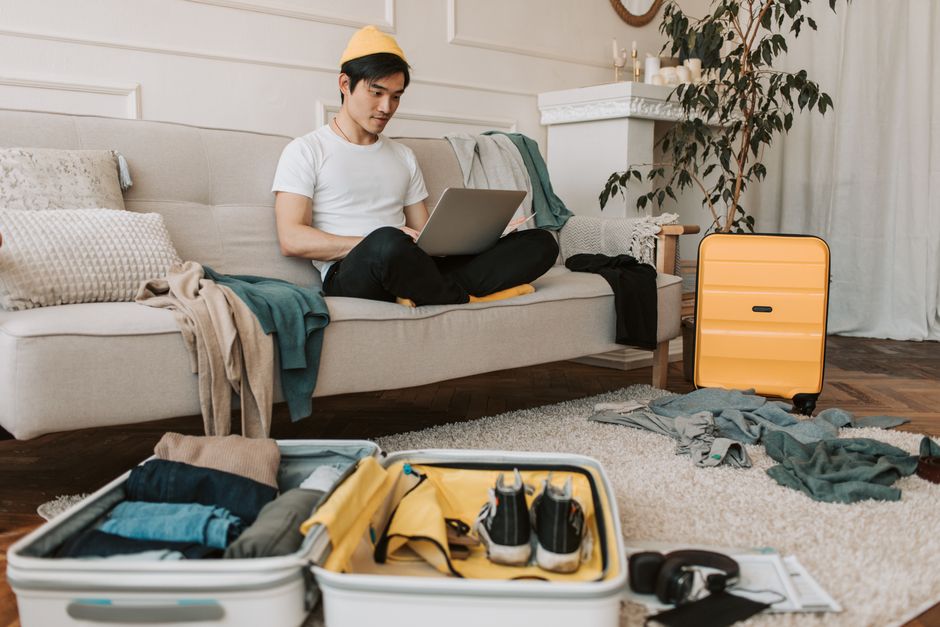
A good packing list isn’t just a pile of items. It’s a decision-making tool. Before you write anything down, answer these three questions:
- What is the climate at your destination during your exact travel dates? Check historical averages, not just the general season. Bangkok in November averages 28°C and 70% humidity. Reykjavík in November averages 2°C and rain 15 days out of 30.
- What activities are you doing? Hiking requires different gear than museum-hopping or beach lounging. If you’re doing all three, you need versatile items.
- What is your baggage allowance? A 40-liter carry-on forces different choices than a 65-liter checked bag. Know your limits before you pack.
These three questions filter out 80% of the bad advice you’ll find online. If a packing list doesn’t start with these, it’s not worth your time.
Real Gear That Works: Specific Packing List Items for 2026
Instead of vague advice like “bring a good backpack,” here are specific products with real specs that solve common packing problems.
Bag: Osprey Farpoint 40
The Osprey Farpoint 40 is a 40-liter travel backpack that fits most airline carry-on size limits (55 x 35 x 25 cm). It weighs 1.6 kg empty and has a stowaway harness system that hides the straps when you check it. Price is around $190. This is the best option for travelers who want one bag for trips up to 2 weeks in warm climates.
Packing Cubes: Eagle Creek Pack-It Cube Set
Packing cubes compress your clothes and keep your bag organized. The Eagle Creek Pack-It Cube Set (3 cubes, $45) uses a compression zipper that reduces clothing volume by about 30%. For a 10-day trip, you can fit 5 t-shirts, 3 pairs of shorts, 2 pairs of pants, and underwear in these cubes inside a 40-liter bag.
Toiletry Kit: Tom Bihn Travel Stuff Sack
Most toiletry bags are too bulky. The Tom Bihn Travel Stuff Sack ($25, 3 liters) is a simple lightweight nylon pouch that fits TSA-approved liquids, a toothbrush, and basic toiletries. It weighs 60 grams and packs flat when empty. This beats hard-shell toiletry cases that waste space.
When NOT to Buy These Items
If you are on a tight budget, skip the Tom Bihn bag and use a simple ziplock bag. If you are backpacking for 6+ months, the Osprey Farpoint 40 may be too small — consider the Osprey Farpoint 55 or a duffel like the Patagonia Black Hole Duffel 55L ($160, 55 liters, 1.1 kg). If you never check bags, the Away Carry-On ($295, 36 liters, 3.5 kg) is a hard-shell alternative with a built-in battery for charging devices.
Common Packing Mistakes and How to Fix Them

Even experienced travelers make these errors. Here are the three most common, with specific fixes.
| Mistake | Why It Happens | Fix |
|---|---|---|
| Packing “just in case” items | Fear of needing something you don’t have | Ask: “If I need this, can I buy it at my destination for under $20?” If yes, leave it home. |
| Overpacking shoes | Shoes are bulky and heavy | Limit to 2 pairs: one walking shoe and one sandal or dress shoe. Wear the bulkiest pair on the plane. |
| Forgetting electronics adapters | Different countries use different plug types | Buy a universal adapter like the Ceptics World Travel Adapter Kit ($22, supports 150+ countries). |
Another failure mode: packing too many toiletries. A 100ml bottle of shampoo lasts 2 weeks for most people. You don’t need a full-size bottle. Use travel-size containers or buy at your destination.
How to Build Your Own Packing List (Step-by-Step)
Stop searching for “packing list que es” and start building one that fits your trip. Here is the exact process I use.
Step 1: Write Down Your Trip Details
Destination, dates, climate (high/low temps, rain probability), activities, and baggage type (carry-on vs checked). Example: Tokyo, 7 days in April, 10-18°C, light rain possible, sightseeing and one formal dinner, carry-on only (40-liter limit).
Step 2: List Clothing by Category
Use these categories: tops, bottoms, outerwear, shoes, underwear/socks, accessories (hat, scarf, belt). For Tokyo in April: 3 long-sleeve shirts, 2 t-shirts, 1 pair jeans, 1 pair chinos, 1 lightweight jacket (Uniqlo Blocktech Parka, $80), 1 pair walking shoes (Merrell Moab 3, $140), 1 pair casual sneakers, 5 pairs socks, 5 pairs underwear.
Step 3: Add Non-Clothing Essentials
Toiletries (travel-size), electronics (phone, charger, power bank, adapter), documents (passport, visa, insurance, copies), medical kit (pain relievers, band-aids, antidiarrheal), and miscellaneous (sunglasses, reusable water bottle, packing cubes).
Step 4: Weigh and Adjust
Put everything in your bag and weigh it. If you’re over the limit, remove one pair of shoes or swap a jacket for a lighter one. The Patagonia Nano Puff Hoody ($250, 300g) is warmer than a fleece and compresses smaller.
This method takes 30 minutes and eliminates the anxiety of forgetting something important. It also saves you money on baggage fees and last-minute purchases.
Bottom line: “Packing list que es” is a search for clarity. The clarity comes from a system, not a list. Use the three-question filter, buy versatile gear like the Osprey Farpoint 40 and Eagle Creek cubes, and always customize for your specific trip. That’s how you pack right every time.